






By Usha Muthusamy
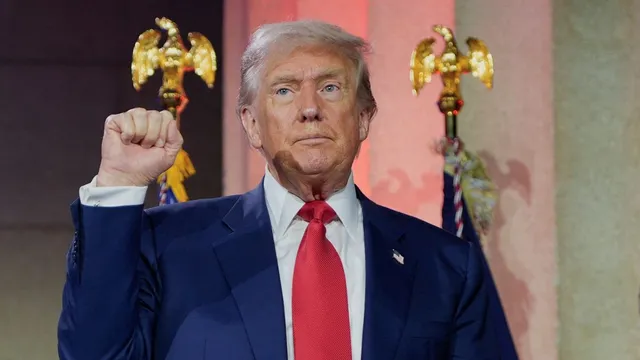
USA, 28 July 2025: President Donald Trump has delivered a direct and forceful warning to American technology companies: cease building factories abroad and end the practice of hiring foreign workers, specifically targeting India. Speaking at a recent Artificial Intelligence (AI) Summit, Trump declared that the era of “radical globalism” in the tech industry, which he claims has left millions of Americans feeling “distrustful and betrayed,” is “over” under his administration.
Trump explicitly criticized major tech companies for “reaping the blessings of American freedom while building their factories in China, hiring workers in India, and slashing profits in Ireland.” He urged Silicon Valley to embrace a “new spirit of patriotism and national loyalty” to ensure the U.S. wins the global AI race, calling for tech firms to be “all in for America.”
This strong stance reinforces Trump’s long-standing “Hire American” agenda. During his previous tenure, he signed the “Hire American” executive order in 2020, which aimed to restrict federal agencies from contracting H-1B visa holders. Vice President JD Vance has echoed these sentiments, criticizing companies like Microsoft for reportedly laying off American workers while increasing applications for H-1B visas.
The H-1B visa program is crucial for the American tech sector, with over 70% of these visas typically going to Indian nationals. Trump’s renewed push signals a potential overhaul of the system, including discussions about replacing the current random lottery with a points-based model that could favor higher-wage, higher-skilled professionals. Such changes could significantly impact Indian tech professionals seeking to work in the U.S. and compel Indian IT firms to reassess their global talent strategies.
While major tech players like Google, Microsoft, and IBM have extensive operations in India and view it as a critical market, employing millions directly and indirectly, Trump’s demands create uncertainty. Experts are debating whether a complete withdrawal from Indian and Chinese talent would be counterproductive for U.S. tech firms, potentially hindering innovation and global competitiveness. Some analysts even suggest that tighter visa norms could inadvertently boost India’s Global Capability Centres (GCCs), prompting more U.S. firms to expand their onshore presence in India to access skilled talent without navigating immigration hurdles.
These direct warnings are part of a broader “America First” strategy that also includes ongoing trade discussions with India, with a potential 25% tariff on Indian goods set for August 1 if a comprehensive trade deal is not reached. The developments highlight a complex and evolving dynamic in U.S.-India economic and technological relations under Trump’s “America First” agenda.