





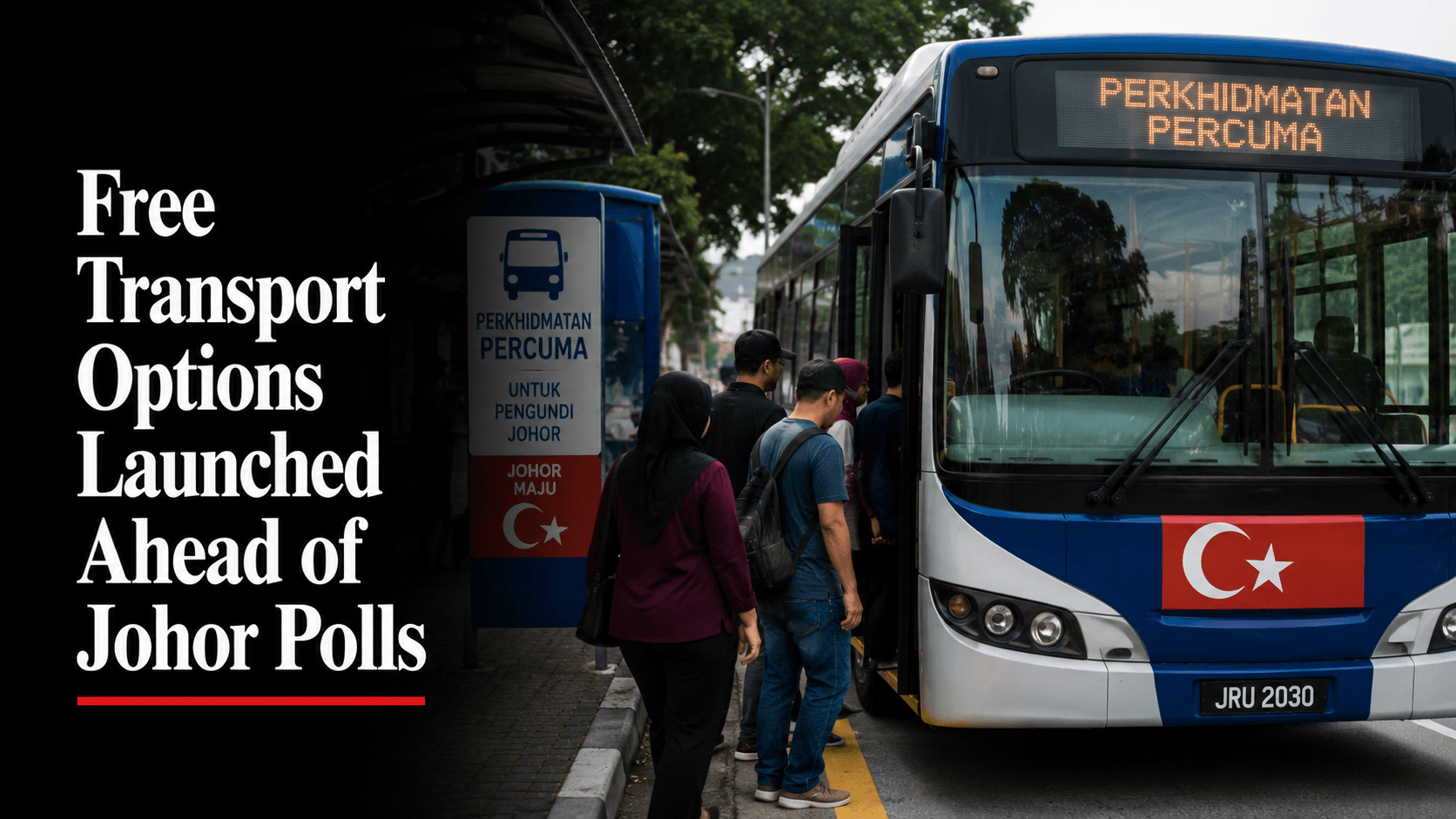
JOHOR BAHRU – Public transport infrastructure and civil society networks are ramping up operations across the state to facilitate voter turnout for the upcoming weekend elections. In a coordinated effort to assist outstation voters heading home for the Johor polls, a prominent non-governmental organization (NGO) has stepped forward to arrange free commercial bus charters, while Keretapi Tanah Melayu Berhad (KTMB) has officially doubled its train passenger capacity along major southern routes.
The mass mobilization efforts come as the state prepares for crucial polling sessions scheduled for Saturday, July 11. With over 2.7 million eligible voters scattered across various urban manufacturing hubs and neighboring regional trade zones, securing reliable, affordable transit options is viewed as a major factor that could heavily influence the final ballot box turnout figures.
Transport Solutions Deployed for the Johor Polls
Civil groups are prioritizing student populations and working professionals who need to commute from outlying northern states back to their respective southern constituencies. Under the volunteer-led initiative, chartered buses will depart from central transit hubs in Kuala Lumpur and Selangor, delivering passengers directly to key drop-off stations across Johor. Organizers emphasized that these free transit arrangements are strictly non-partisan, aimed entirely at ensuring high democratic participation in the Johor polls regardless of political affiliation.
Concurrently, national rail operator KTMB has adjusted its schedules to accommodate the sudden surge in passenger traffic. Additional coach cars are being attached to existing Electric Train Service (ETS) and KTM Intercity lines heading south. Station managers confirmed that the increased frequency and doubled seating capacities are designed to handle peak weekend travel blocks, preventing major travel backlogs at local platforms.
Community Logistics Supporting the Democratic Process
Local business associations and community volunteer squads are also providing localized shuttle networks within rural constituencies. For example, specific volunteer fleets are coordinating with elderly residents and persons with disabilities to manage short-distance trips between residential neighborhoods and designated voting stations. These micro-logistics services help bridge the gaps left by standard municipal transport lines, particularly in vast agricultural districts where polling centers are geographically isolated.
Meanwhile, the Election Commission (EC) has praised these cross-sector transit support campaigns, reminding transport operators to strictly adhere to standard vehicle safety limits during the busy election weekend. Political analysts point out that high turnout percentages often shake up initial seat projections in competitive state assemblies. Ultimately, these aggressive transport and civil initiatives ensure that logistical barriers will not prevent local citizens from casting their ballots in the defining Johor polls.