






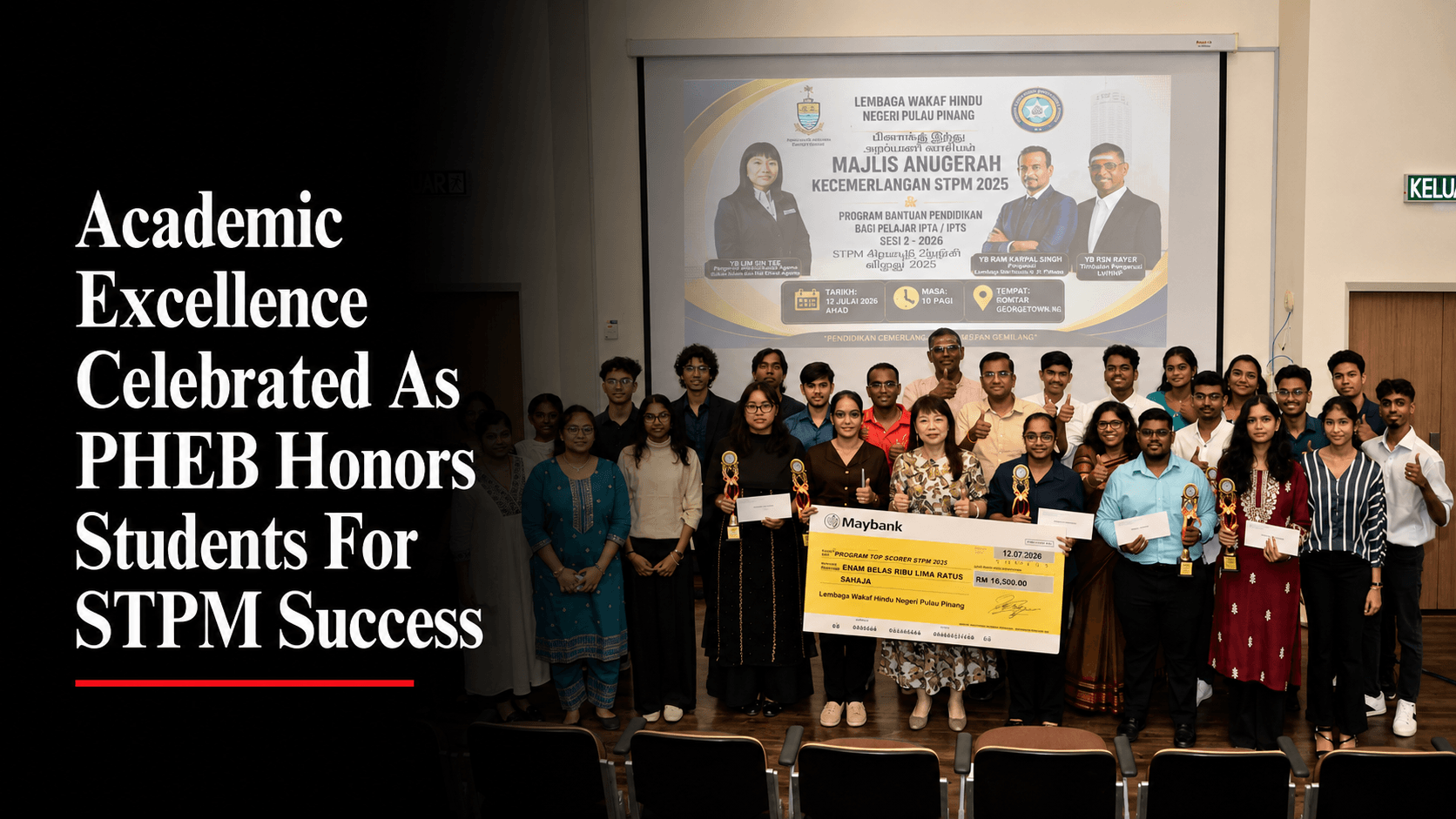
GEORGE TOWN, July 13 – The Penang Hindu Endowments Board (PHEB) held a prestigious award ceremony to celebrate academic excellence among Indian youths in the state. During the event, the board recognized 26 outstanding Sixth Form achievers who excelled in their pre-university examinations. Consequently, community leaders praised the initiative for inspiring future generations of scholars.
Celebrating Academic Brilliance
The special event specifically focused on reward incentives for top-tier academic results. Every single one of the 26 invited high-achievers successfully secured a Cumulative Grade Point Average (CGPA) of 3.50 or above in the 2025 STPM examinations. As a result, the board presented the students with official financial excellence grants and special merit certificates to support their upcoming tertiary studies.
Deputy Minister of Women, Family and Community Development, Lim Hui Ying, officially launched the ceremony in George Town. Furthermore, she expressed deep admiration for the dedication shown by the young students, their hardworking families, and their school teachers. She noted that cultivating high-level education standards remains vital for the social upliftment of minority communities.
Strong Leadership Support
Several prominent state dignitaries attended the gathering to show their structural support. PHEB Chairman R.S.N. Rayer led the presentation panel alongside Deputy Chairman Senator Dr. Lingeshwaran R. Arunasalam and Penang Island City Council (MBPP) Councilor Viswanathan Thangavelu. The leaders jointly emphasized that the PHEB Honors Students initiative remains a permanent yearly fixture on their community development calendar.
“We want our young people to reach the highest peaks of academic success,” stated PHEB Chairman R.S.N. Rayer. “By rewarding these efforts early, we establish a robust pathway toward developing strong, highly skilled professionals.”
Empowering Future Leaders
The PHEB honors students program forms a key part of the board’s expanded social care mandate. Beyond managing religious endowments, the council now funnels significant resources into educational subsidies, medical aid, and digital literacy training. According to board representatives, these proactive educational funds help reduce the financial burdens that low-income households face when entering public universities.
Ultimately, the event concluded with an interactive motivational session designed to prepare the students for the shifting demands of modern campus life. The award recipients expressed profound gratitude to the board for validating their long hours of quiet study. Moving forward, the PHEB plans to scale up its technical mentorship networks to ensure these young graduates successfully bridge the gap into high-value professional industries.