







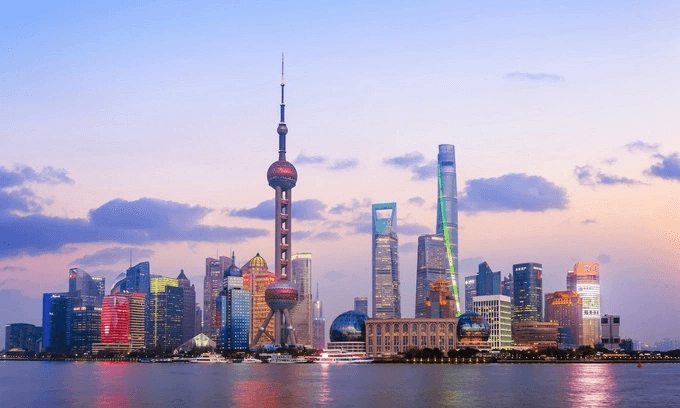
BEIJING — Shanghai and Beijing have secured places among the world’s 10 most intelligent cities in the inaugural Intelligent Cities Index 2026 released by global consulting firm Boston Consulting Group (BCG). The assessment evaluated 61 major cities across 39 countries to examine how urban centers effectively leverage artificial intelligence and digital technologies to enhance daily living and business operations.
Index Framework and Global Rankings
The index evaluated municipal performance across five key domains: resident outcomes, intelligent city strategy, technology adoption, ways of working, and enabling infrastructure.
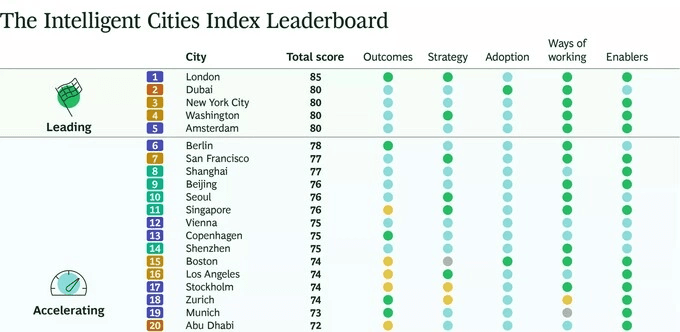
London topped the overall global rankings, followed by Dubai, New York, Washington D.C., and Amsterdam. Berlin, San Francisco, Shanghai, Beijing, and Seoul completed the top 10. Singapore ranked 11th, bringing the total number of Asian cities in the top 20 to seven, alongside Shenzhen at 14th place.
AI Integration and Resident Outcomes
BCG noted that leading cities do not necessarily dominate all five domain categories simultaneously. Instead, top-performing municipalities combine distinct strengths—some maintaining a balanced approach across domains, while others focus on targeted areas like strategic deployment or technological adoption.
The study highlighted artificial intelligence as a foundational element of modern smart cities. Urban centers recording higher rates of AI integration consistently demonstrated improved resident outcomes, particularly regarding quality of life and economic opportunities.
Data showed that cities in the top tier for AI adoption featured a broader range of practical AI applications alongside higher resident satisfaction scores. Furthermore, high rates of generative AI usage across Asia, Africa, and the Middle East correlated with strong public optimism regarding productivity and economic prospects.
Strategic Recommendations for Municipalities
The report stressed that long-term digital maturity requires combining hard infrastructure with soft enablers, such as talent development, public funding, and robust innovation networks.
To sustain digital growth, BCG recommends that municipal authorities:
- Define clear, long-term technological priorities aligned with public needs.
- Strengthen governance frameworks and public-private sector partnerships.
- Scale verified AI-enabled municipal services across public infrastructure.
- Allocate targeted investments toward digital skills training and ecosystem infrastructure.