




By: Kayatri Athavan
October 15, indeed, marks a day for reminiscing the legacy left by our ancestors to this current generation. This day is known to officially celebrate the establishment of Tilak & Bindi as International Bindi and Tilak Day by Hinduism Worldwide (INC) by joining hands together with the United Malaysian Hindu Voice, Global Hindu Federation, Hindi Council of Australia, and it’s supported by 30 over worldwide NGOs.
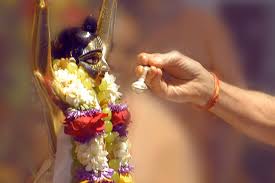
The “Tilak” and ‘Bindi’ are known as the two prominent symbols that denote the greatness of Hinduism.
In ancient days, men used to regularly don the Tilakam on their forehead, which was generally made of sindoor and vibhuti. It all started in the 17th century, when men used to wear it on a daily basis, as it all started off from great Hindu legends and leaders like Aryabhatta, the great mathematician, Rajendra Chola, the renowned emperor, etc who had been a starter of the norm, of wearing a thilakam during their era itself. Whereas, Bindi was fundamentally worn by Hindu women, to date.
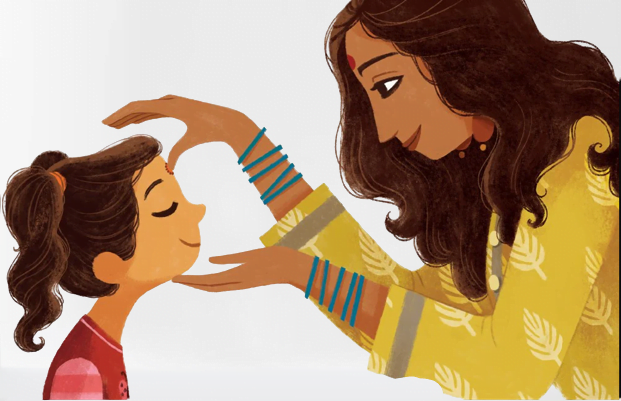
In the past, the Bindi was worn with sindoor to have a connection to the spiritual chakras and to protect one from being prey to negative energies. Most of the Bindi is worn on the forehead to significantly represent their marriage, as it has now been revamped from being in a liquid form or powder to a customized one where it comes in a sticker form.
Thus, one of the most prevailing scientific reasons that lie behind the practice of embracing tilak and bindi as a part of the Hindu culture is to awake the mid-point of one’s concentration power. The meeting point of our body’s vital nerves is believed to be exactly in the middle, between the eyebrows. It functions as the focal point for the third eye’s positioning and awakening. When this particular area is stimulated, the person becomes calm, which eradicates stress and anxiety.
Besides, this has proven to enhance respiratory issues. The nerve that travels to the nose and the areas nearby are included when it gets pressed at this specific point between the eyebrows. The nerves would enrich the blood flow to the nasal passage when they were prompted. As a result, a blocked nose is eliminated, and sinus and nasal swelling will be receded.
Hence, with all pride, let’s Embrace Wearing Tilak & Bindi!