





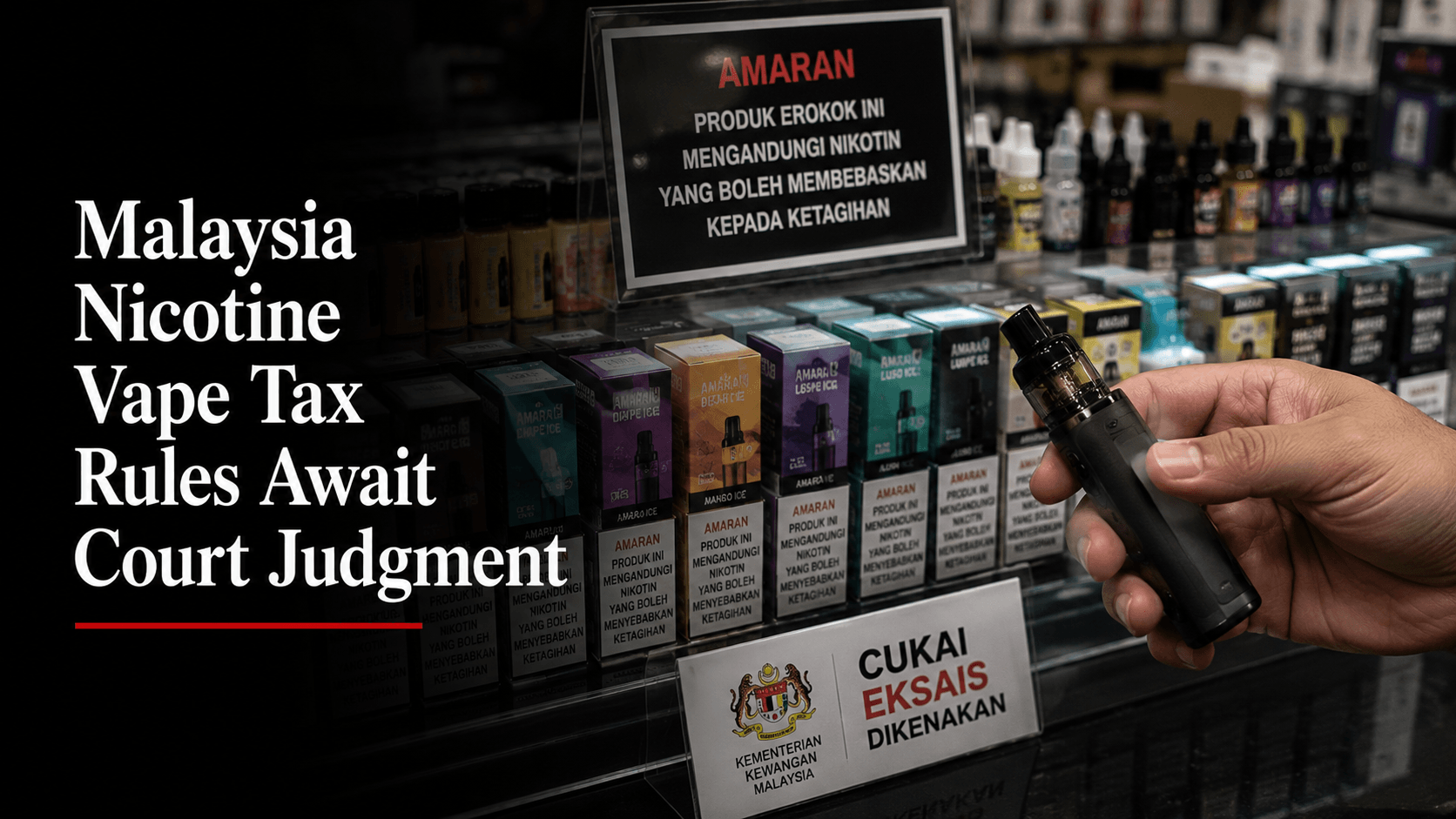
KUALA LUMPUR – The federal executive branch has deferred final adjustments regarding domestic e-cigarette revenue frameworks until ongoing judicial appeals conclude completely. Specifically, future Malaysia nicotine vape tax rules will be determined in strict accordance with the higher court’s ultimate ruling on the matter. Prime Minister and Finance Minister Datuk Seri Anwar Ibrahim formalized the legislative position in a written parliamentary response. He noted that Putrajaya will respect the legal process as state attorneys challenge a previous High Court decision.
Awaiting Judicial Clarity for Malaysia Nicotine Vape Tax Rules
The state’s fiscal policy remains heavily tied to complex legal disputes surrounding public health classifications. For instance, three prominent non-governmental organizations successfully challenged the health ministry’s previous removal of nicotine liquids and gels from the national Poisons List. The High Court subsequently ruled that the sudden de-listing order was irrational. Because the Attorney General’s Chambers has filed an official appeal, the exact timeline for setting Malaysia’s nicotine vape tax rules rests on the Court of Appeal.
Furthermore, the initial decision to remove the chemical compound from the safety register was tightly linked to macroeconomic planning. The state had intended to bring alternative nicotine items under a regulated framework to generate extra revenue during the 2023 Budget tabling. However, health advocates argued that lifting the restriction prematurely exposed younger demographics to unregulated electronic delivery systems. Therefore, establishing permanent Malaysia nicotine vape tax rules requires a definitive declaration regarding whether the initial liquid exemptions are legally valid.
Balancing Fiscal Strategy and Public Health Requirements
The parliamentary query raised by Datuk Dr Ahmad Yunus Hairi highlighted growing legislative concerns over potential revenue leakages during the litigation phase. For example, clear guidelines are essential to prevent unauthorized distribution networks from avoiding domestic customs oversight entirely. Treasury officials want to avoid a situation where vendors exploit legal grey areas while the higher courts review the case details.
Enforcement Priorities for Malaysia Nicotine Vape Tax Rules
Meanwhile, the Ministry of Health continues to enforce existing sales standards across commercial retail chains to protect local families. Ensuring compliance helps separate licensed operators from bad actors who smuggle unverified electronic goods into domestic markets. By waiting for a clear judicial mandate, the government aims to establish a highly sustainable structure for Malaysia’s nicotine vape tax rules over the long term. Ultimately, this cautious approach ensures that national tax collection strategies remain perfectly aligned with constitutional laws and public wellness goals.