






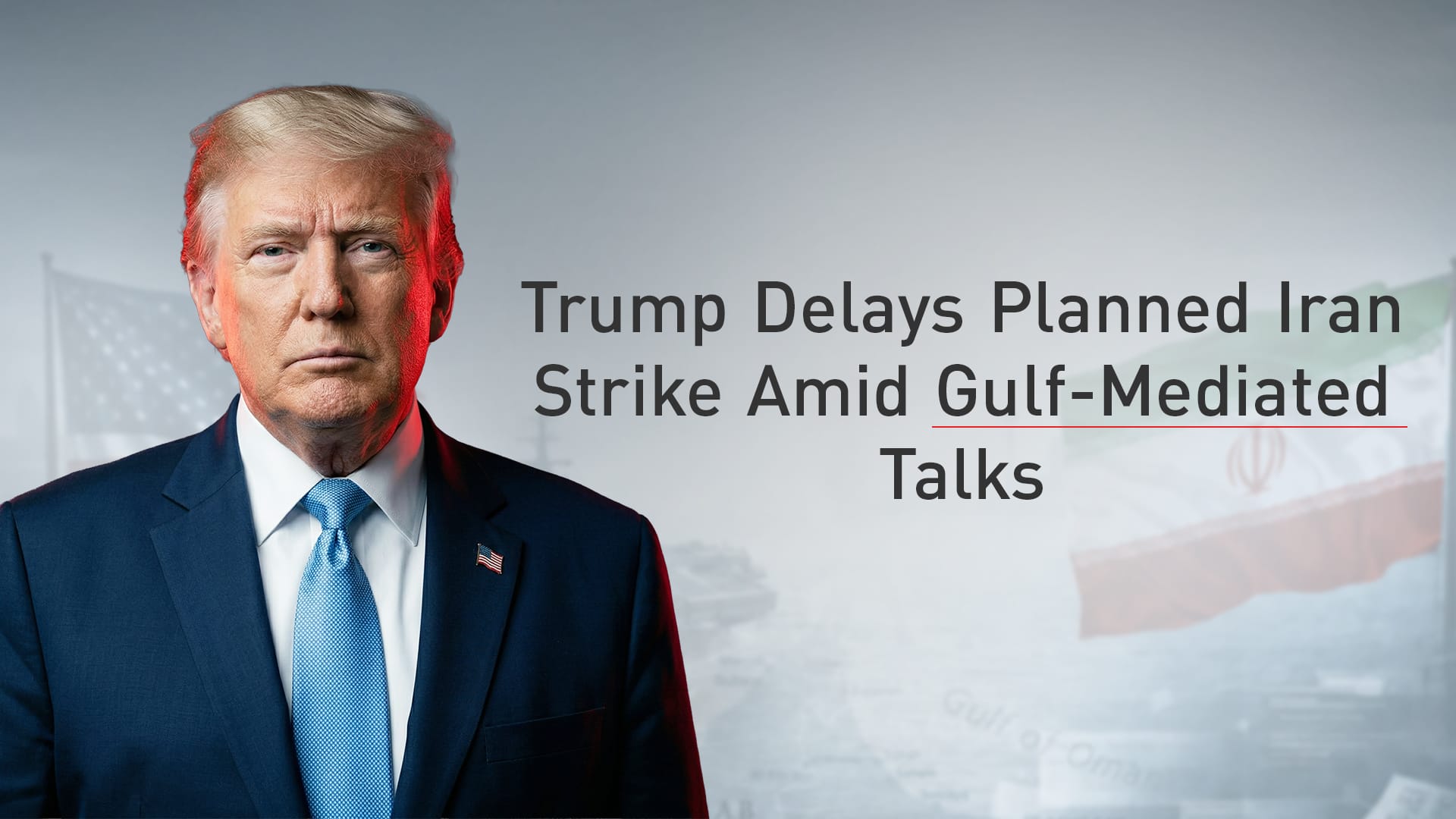
WASHINGTON — US President Donald Trump announced Monday that he has postponed a major military strike against Iran that was scheduled for Tuesday. The decision comes after the leaders of Qatar, Saudi Arabia, and the United Arab Emirates requested a pause to allow high-level diplomatic talks to continue.
The unexpected shift developed right after Tehran confirmed it had submitted a response to a new peace proposal from Washington. Writing on his Truth Social network, Trump stated that he agreed to hold off on the scheduled operation because regional allies convinced him that a diplomatic breakthrough is possible. According to Trump, Gulf leaders strongly believe the current negotiations will result in a binding agreement that ensures Iran never acquires nuclear weapons.
The diplomatic intervention by Gulf nations highlights the severe economic and security risks of a prolonged war. Analysts note that a large-scale escalation threatens major global shipping lanes in the Strait of Hormuz, which could trigger a massive spike in global energy prices. By stepping in as mediators, regional powers are attempting to stabilize the Middle East while pushing both Washington and Tehran toward a sustainable truce.
While the immediate bombardment is on hold, the pause remains highly fragile. Trump noted that he has instructed the US military to remain on high alert. The armed forces are prepared to launch a full, large-scale assault on a moment’s notice if the current negotiations fail to produce an acceptable deal.
The sudden diplomatic window follows a week of intense pressure from Washington. Trump had recently issued sharp warnings to Tehran after returning from a high-profile meeting with Chinese President Xi Jinping, stating publicly that time was running out for the Iranian government.
The current standoff is part of a broader conflict that erupted in late February, when US and Israeli forces initiated a series of military strikes against Iranian targets. While official channels are now open for negotiations, military units in the region remain positioned for immediate deployment if the truce collapses.