





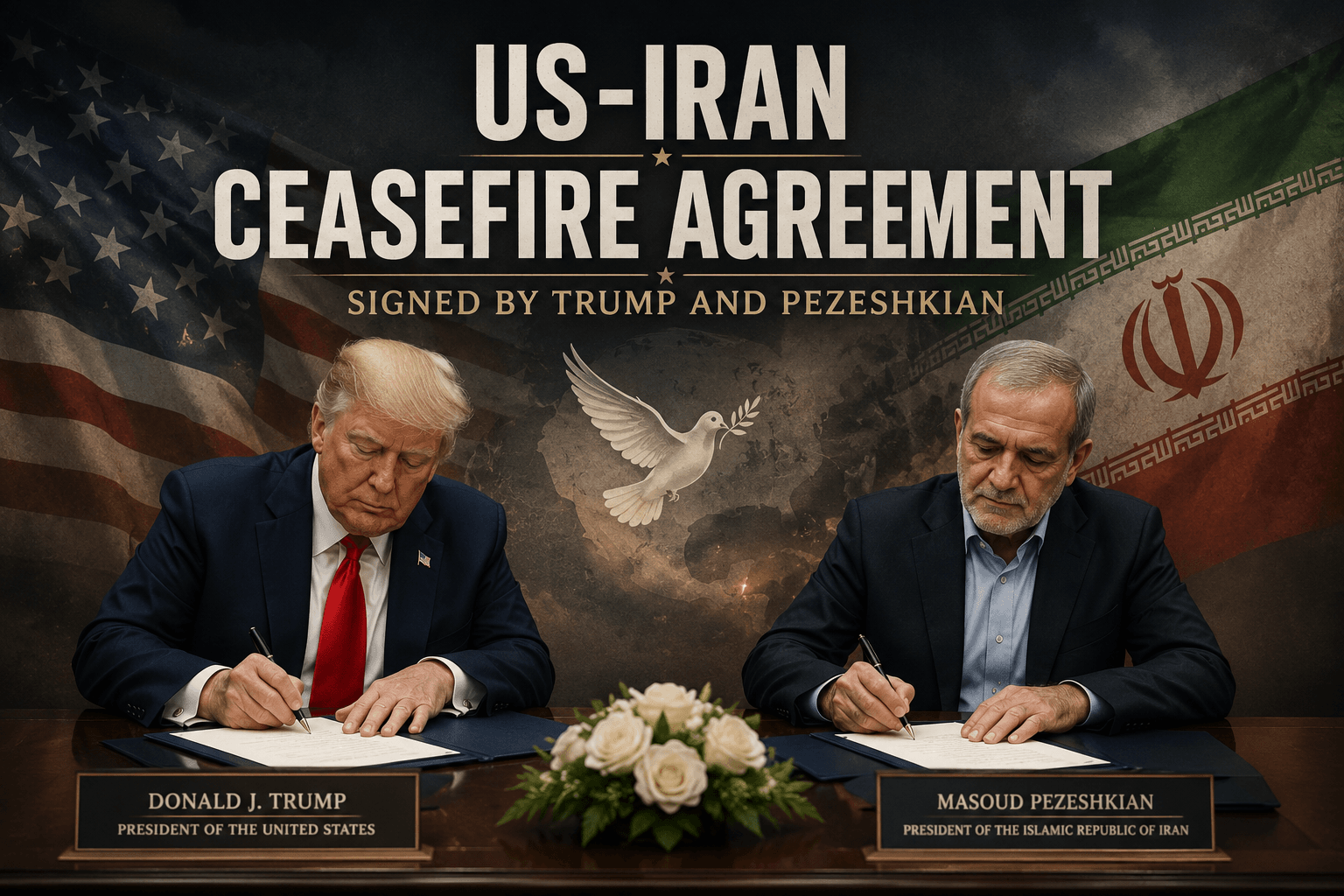
EVIAN-LES-BAINS – A massive diplomatic shift has halted a major conflict in the Middle East. Specifically, the text of an interim US-Iran ceasefire agreement was officially released on Wednesday. Both US President Donald Trump and Iranian President Masoud Pezeshkian have digitally signed the historic memorandum of understanding. The breakthrough occurred during the high-level G7 Summit in France, bringing an immediate end to four months of heavy warfare.
Heavy Threat Backs the US-Iran Ceasefire Agreement
Despite signing the truce, the US President maintained his characteristically intense language. For instance, Trump openly threatened to resume military attacks and kill Iranian officials if Tehran fails to honor its side of the pact. “We are going to bomb the hell out of them if they violate the agreement,” Trump told reporters at a packed press conference. He added that he expects the nation to follow the rules closely. This warning caused oil prices to fluctuate wildly in late trading.
Furthermore, Trump backed away from several of his original reasons for launching the war. For example, he stated it would be unfair for Tehran to completely lose its ballistic missiles. This stands in sharp contrast to his previous vows to obliterate the country’s defense programs. He labeled the Iranian negotiators as very smart people. Consequently, teams from both capitals will spend the next 60 days working toward a permanent peace pact.
Major Economic Relief Under the 14-Point Pact
The newly signed US-Iran ceasefire agreement brings big financial changes to the global landscape. Under the official 14-point text, the United States will immediately end its strict naval blockade of Iranian ports. Additionally, Washington plans to lift a wide range of international trade sanctions. The package also includes unfreezing billions in assets and a 300-billion-dollar economic plan. These large steps aim to fully secure maritime traffic through the vital Strait of Hormuz.
Meanwhile, close regional allies continue to view the truce with intense concern. For instance, Israel was completely excluded from the secret peace talks. The Israeli military currently occupies portions of southern Lebanon and vows to keep fighting local threats. Although G7 leaders hailed the US-Iran ceasefire agreement, lasting safety remains fragile. Technical teams must work around the clock to ensure the temporary truce does not collapse into renewed combat.