




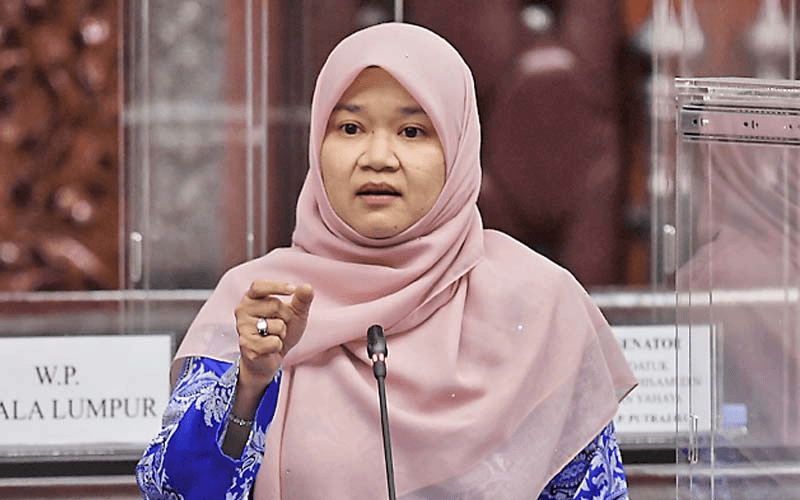
PUTRAJAYA — Most primary school infrastructure projects required to accommodate six-year-old pupils in Year One for the 2027 academic session have been completed ahead of schedule, Education Minister Fadhlina Sidek announced.
Speaking at the Ministry of Education’s (MOE) monthly assembly in Putrajaya, Fadhlina confirmed that facilities and teacher placement preparations are progressing smoothly. She added that she, alongside MOE Secretary-General Datuk Wan Hashim Wan Rahim, will conduct site visits to inspect completed school facilities nationwide.
Enrolment Metrics and Infrastructure Deployment
The voluntary policy allowing six-year-olds to enter Year One starting in 2027 has seen stable registration metrics following diagnostic screenings,
- Total Enrolment Demand – Combined Year One registrations stand at 478,419 pupils, comprising 405,033 standard seven-year-olds and 73,386 six-year-olds.
- Modular Classroom Scaling – MOE is completing 2,596 Industrialised Building System (IBS) classrooms across 838 primary schools nationwide to accommodate additional capacity.
- Workforce Deployment – Teacher placements have been recalibrated, with 3,150 contract-of-service (COS) teachers onboarded to align directly with finalized registration figures.
RM100,000 Direct Reform Fund per School Launched
Addressing staff and reporters, Fadhlina also announced the rollout of a nationwide school reform pilot starting next week. Under the program, 10 schools per district (five primary and five secondary schools) will be elevated as model institutions.
Selected schools will receive direct allocations of up to RM100,000 each to execute customized improvement plans tailored to their specific needs.
However, Fadhlina explicitly cautioned school administrators against using funds for superficial upgrades:
“Installing air conditioners in every classroom or putting smartboards on walls is not reform. Genuine reform requires a structural shift in culture, ecosystem, and mindset across the entire school community.”
Safety Guidelines and Holistic Student Welfare
To reinforce the reform agenda, the MOE officially launched the Safe School Guidelines and Student Protection Policy during the assembly to tackle bullying, enhance student safety, and bolster mental health support.
The ministry will also expand early childhood and student empathy programs, including PAKAT for preschool education and NEKAD, ensuring that school upgrades address administrative, safety, and social development standards simultaneously.