








KUALA LUMPUR — Facing retrenchment or a sudden layoff is one of the most stressful experiences a worker can undergo. When monthly income abruptly stops but financial commitments remain, navigating the immediate aftermath requires clear, actionable resources.
For private-sector employees in Malaysia, the Employment Insurance System (EIS)—administered by the Social Security Organisation (PERKESO)—serves as a vital financial safety net. It provides temporary financial relief, career counseling, and re-employment support. If you have been contributing to the fund through your monthly salary deductions, understanding how to activate these benefits is crucial to keeping your household afloat.
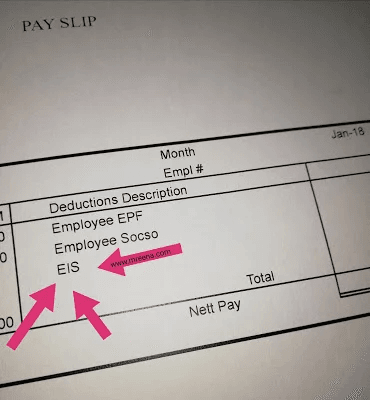
What is the EIS and Who is Covered?
Introduced under the Employment Insurance System Act 2017, the EIS is a mandatory social security pool funded equally by employers and employees. Both parties contribute 0.2% of the employee’s monthly base salary. For instance, a worker with a monthly salary of RM3,000 will see a deduction of RM6, while the employer contributes an additional RM6 into the central fund.
Regulatory Compliance Note: Effective October 1, 2024, the official maximum monthly wage ceiling for EIS contributions was raised from RM5,000 to RM6,000. For any employee earning above this threshold, monthly payroll contributions are capped at a maximum of RM11.90 each.
Eligibility Criteria
To qualify for the Job Search Allowance (JSA) and secondary welfare benefits, your loss of employment must be completely involuntary ,
- Eligible Conditions – Retrenchment, redundancy, company restructuring or closure, Voluntary Separation Schemes (VSS/MSS), or constructive dismissal (such as workplace harassment or non-payment of wages).
- Contribution Milestone – The claimant must have actively contributed to the EIS framework for a minimum of 12 months within the 24-month window preceding the date of termination.
Who Cannot Claim?
You are generally not eligible to claim EIS assistance if your employment ended due to voluntary resignation, termination resulting from proven misconduct, mandatory retirement, or if you are self-employed or freelancing.
Financial Scales – Staggered Payouts and Payout Caps
The financial replacement income does not match your full previous salary. Instead, PERKESO delivers staggered monthly payments calculated against your average assumed monthly wage, running for up to six months. The allowance begins at 80% of your assumed salary for the first month and gradually scales down over time to encourage active re-employment.
However, irrespective of the percentages, all monthly allowance payments are subject to a maximum cap of RM2,000 per month.
EIS Allowance Duration by Contribution History
| Contribution History | Maximum Benefit Duration | Payout Percentage Structure (By Month) |
| Less than 3 Years | Up to 3 Months | Month 1: 80% | Month 2: 50% | Month 3: 40% |
| 3 to 5 Years | Up to 5 Months | Month 1: 80% | Month 2: 50% | Month 3: 40% | Month 4: 40% | Month 5: 30% |
| More than 5 Years | Up to 6 Months | Month 1: 80% | Month 2: 50% | Month 3: 40% | Month 4: 40% | Month 5: 30% | Month 6: 30% |
Real-World Case Study: A worker earning a regular monthly salary of RM3,500 who has consistently contributed to the EIS for four consecutive years falls into the 3-to-5-year bracket. Under this framework, they are eligible to receive a cumulative total of approximately RM9,550 distributed over a five-month safety window.
The Application Blueprint: Step-by-Step
The most critical factor when losing a job is the clock. Claimants have a strict, non-negotiable window of 60 days from their official last day of work to submit an application. Missing this deadline nullifies your eligibility entirely.
1. Prepare Documentation
Ensure you have high-resolution scans or original copies of:
- Your MyKad (Identity Card)
- Official employment termination or retrenchment letter (the written reason for job loss must align clearly with EIS rules)
- Payslips from your last 3 months of employment
- Personal bank account details for direct fund crediting
2. Submit the Claim
- Online Portal: Create an account on the official MYFutureJobs or PERKESO Assist portal to digitally submit your documentation and track your processing status.
- In-Person: Alternatively, visit your nearest physical PERKESO branch with photocopies and original files for over-the-counter assistance.
Post-Approval Responsibilities
Receiving your initial payout—typically disbursed within 14 days of verification—does not mean the process is completely hands-off. To remain eligible for subsequent monthly allocations, you must actively seek employment and satisfy PERKESO’s strict monitoring conditions,
- Register & Profile – Maintain an active job-seeker profile on the MYFutureJobs matching platform.
- Report Logs – Periodically log and update your job-hunting activities and interview records online.
- Placement Sessions – Attend mandatory career counseling and interview appointments arranged by assigned PERKESO Employment Services Officers.
If your application is rejected due to clerical errors, missing documents, or ambiguous termination language from your employer, you retain the legal right to submit a formal appeal to the Social Security Appellate Board within 30 days of receiving your decision notice.