




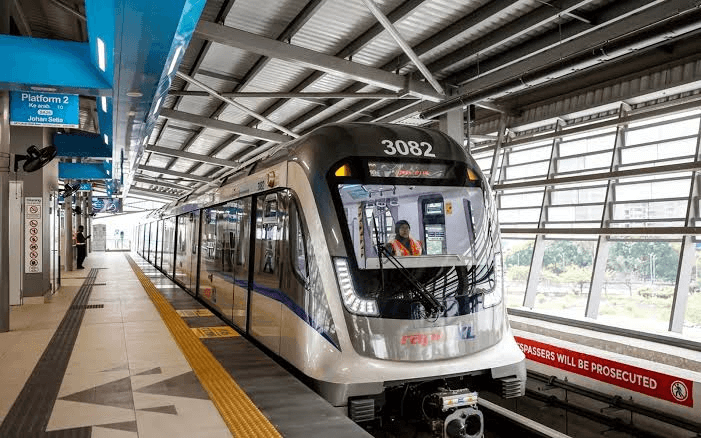
KUALA LUMPUR — As the Light Rail Transit 3 (LRT3) Shah Alam Line officially welcomes its first commercial passengers today, public transport advocates express confidence that the RM16.63 billion infrastructure corridor will successfully transition commuters away from private vehicle dependency.
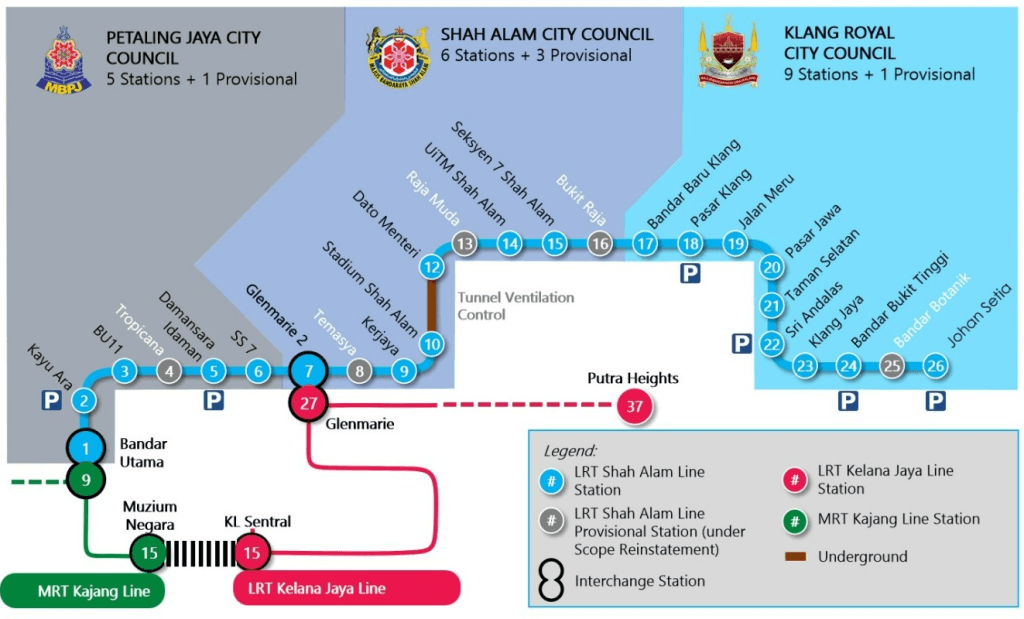
The 37.8km rail line, launched yesterday afternoon by Prime Minister Datuk Seri Anwar Ibrahim at the Johan Setia depot, links Bandar Utama in Petaling Jaya to Johan Setia in Klang across 20 active stations. The strategic transit investment aims to serve a broader target market while actively mitigating chronic traffic congestion across the western Klang Valley corridor.
Achievable Passenger Velocity
Malaysian Public Transport Users Association (4PAM) president Ajit Johl described the line’s targeted ridership—67,000 daily passengers in its first year, scaling to 118,000 within five years—as a highly realistic and calculated trajectory.
“A 43 per cent increase over five years works out to roughly eight per cent annual growth, which would have been calculated based on past experiences with similar rail lines,” Johl state
Johl highlighted that rapid population expansion, upcoming transit-oriented developments (TODs) along the line, and upcoming fuel subsidy rationalizations will act as structural catalysts forcing motorists to reconsider public transit options.
Standard rail fares will span from 80sen to RM4.90, with peak-hour train frequencies locked at eight-minute intervals and 10-to-15-minute windows during off-peak periods.
Solving First-and-Last-Mile Friction
To eliminate historical connectivity gaps that discourage rail usage, the Shah Alam Line debuts with a synchronized support network consisting of 40 dedicated feeder buses, Rapid On-Demand vans, and secure Park & Ride bays distributed along the corridor. Feeder buses and on-demand vans are priced at flat rates of RM1 and RM2 respectively.
However, transport analyst Dr. Rosli Azad Khan cautioned that shifting driving habits remains an uphill battle. Rosli argued that because the government heavily covers the indirect social costs of driving—such as road maintenance and carbon emissions—private vehicle ownership feels artificially affordable to the public.
To achieve massive structural conversion, Rosli urged the implementation of seamless, bundled ticketing systems with daily or monthly fare caps, alongside dense commercial and housing concentration directly surrounding the active stations to mirror successful international transit models.