





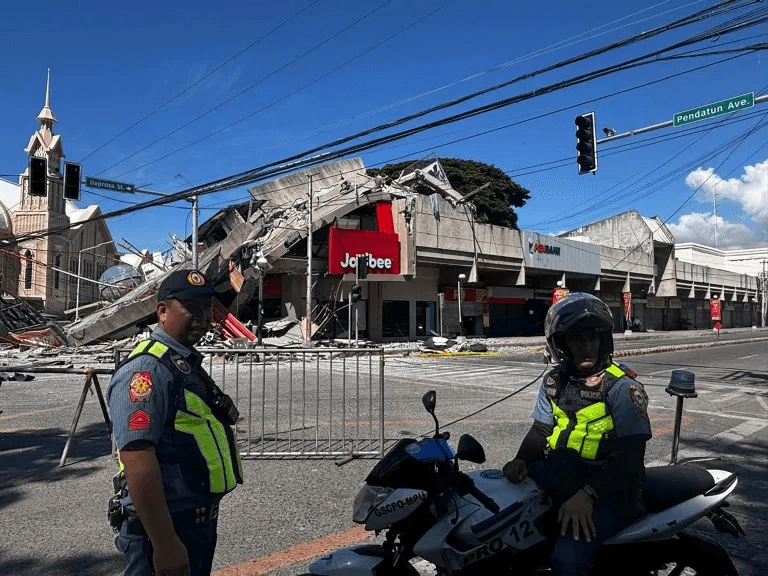
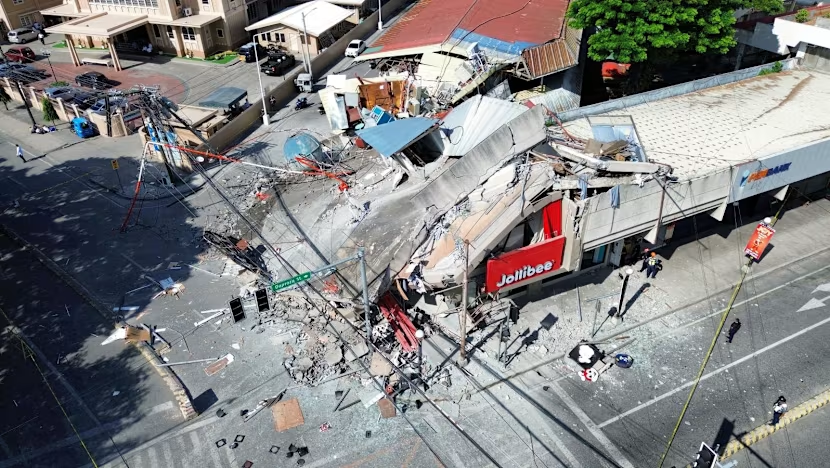
MANILA — The confirmed death toll from a powerful 7.8 magnitude earthquake in the southern Philippines has risen to 37. Disaster response teams are still working hard across the region, national safety officials confirmed on Tuesday. The strong earthquake struck on Monday morning at 7:37 AM, starting deep under the Celebes Sea. Early reports show that General Santos City and Sarangani province were hit the hardest, causing major power outages and building damage across many towns.
To keep track of the situation, the Office of Civil Defense (OCD) released this official breakdown of the casualties as of Tuesday morning,
| Affected District | Confirmed Fatalities | Current Situation |
| Region 12 (SOCCSKSARGEN) | 33 deaths | Main disaster zone; widespread power outages |
| Region 11 (Davao) | 4 deaths | Secondary impact zone; structural safety checks ongoing |
| Sarangani & General Santos | 18 under validation | Hardest-hit urban areas; rescue teams are focused here |
| South Cotabato | 3 under validation | Minor damage reported; regional emergency aid sent |
Emergency workers reported that 144 people were injured and four people are still missing. A spokesperson for the civil defence agency, Diego Agustin Mariano, told reporters that while 37 deaths are confirmed, teams on the ground are still verifying specific numbers to make sure they are completely accurate. The agency has not yet released the final financial total for property damage.
Understanding the Regional Risks
The southern Philippines, particularly the island of Mindanao and surrounding waters, is highly vulnerable to severe seismic activity. This region sits directly along the Pacific Ring of Fire, an extensive horseshoe-shaped belt where a large majority of the world’s volcanic eruptions and earthquakes occur.
Deep underwater trenches and active fault lines run directly beneath the Celebes Sea. When these tectonic plates shift abruptly, they release massive amounts of energy that cause violent surface shaking and, in coastal areas, trigger localized tsunami warnings like the ones seen on Monday.
The area remains dangerous because the ground is still moving. The Philippine Institute of Volcanology and Seismology recorded 1,055 aftershocks by Tuesday morning. Some of these tremors were minor, but others were strong enough to cause more shaking.
The national government is working closely with local leaders in Sarangani to hand out food, water, and medical supplies. Because the earthquake knocked out electricity, officials are sending large power generators and fuel directly to hospitals so that doctors can keep treating the injured without interruption.