






When we think of prosperity in South Asian culture, we light lamps for Goddess Lakshmi. But step back into 8th-century Tamil Nadu, and you will find an older, equally formidable deity presiding alongside her: Tavvai, reverently called Mootha Devi—literally, “The Elder Goddess.”
Today, the word Moodevi is used as a colloquial insult for bad luck or laziness. But history reveals a dramatic transformation: how did an ancient mother-goddess of protection, agriculture, and fertility get rewritten as the emblem of misfortune?
1. Mootha Devi: The Elder Sister Born of the Ocean
In Puranic mythology, during the Samudra Manthan (the churning of the cosmic ocean), Tavvai/Jyeshtha emerged before her younger sister Lakshmi. Because she arrived first, Tamil tradition honored her as Mootha Devi (The Elder Goddess).
Ancient worldview didn’t divide the cosmos into purely “good” and “evil.” Instead, life was seen as a balance of dualities:
- Mootha Devi (Tavvai) – Embodied the harsh realities—adversity, decay, poverty, and raw nature.
- Thangai (Lakshmi) – Embodied the ideal state—abundance, harmony, order, and wealth.
To ancient communities, invoking Mootha Devi was essential. She was not worshipped out of malice, but out of reverence and defense—to ward off famine, disease, and ancestral curses (Pitra Dosh).

2. Iconography: A Matron of Plenty, Not a Monster
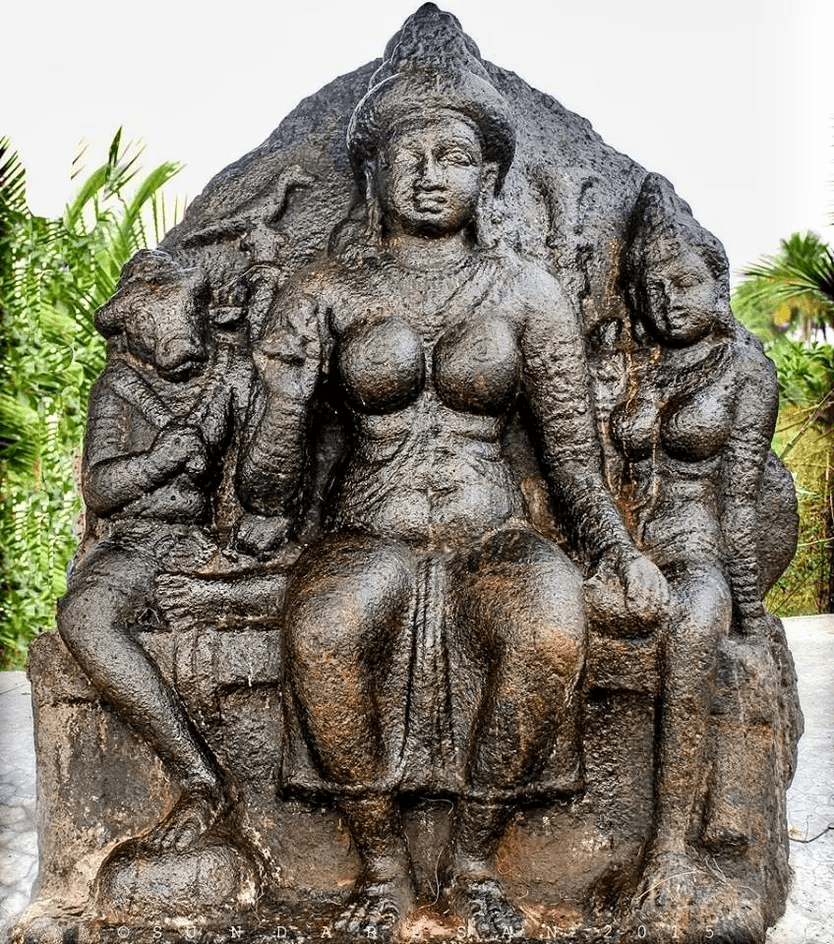
Look at Pallava and Chola cave temple sculptures (such as those at Tirupparankunram or Kanchipuram), and you won’t see a terrifying demoness. You see a dignified, matronly figure,
- Seated in Royal Ease – Sculpted in Bhadrasana (throne posture) with a full, maternal figure.
- Flanked by Her Children – Accompanied by her bull-headed son (Manthan) and daughter (Manthi), representing family protection.
- Symbols of Cleansing – Associated with the crow banner (Kakkaikkodiyal), a broom (symbolizing the sweeping away of domestic ill-fortune), and the water vessel.
3. The Linguistic Fall: From Honorific to Insult
How did Mootha Devi become Moodevi?
As the Bhakti movement grew between the 10th and 12th centuries CE, religious practice increasingly favored purely benevolent, gentle forms of the divine. The complex dualities of early folk religion were simplified,
- Lakshmi was elevated as the sole ideal of auspiciousness.
- Mootha Devi was cast aside as her polar opposite (Alakshmi).
Over generations, the venerated title Mootha Devi slurred into Moodevi, stripping the goddess of her maternal dignity and turning her name into slang for bad luck. Her shrines were moved from main temple sanctums to neglected outer walls, eventually fading from active worship.
Reclaiming the Narrative
Tavvai’s transformation from Mootha Devi to a symbol of bad luck reflects how society reshapes history. She reminds us that in ancient thought, hardship and prosperity were two sides of the same coin—and both deserved a seat at the sacred table.
What do you think? Did you grow up hearing the term Moodevi without knowing its historical roots as an ancient Tamil deity? Share your thoughts in the comments below!