


KUALA LUMPUR — Prime Minister Datuk Seri Anwar Ibrahim’s strategy of leveraging sports as a tool for diplomacy, economic policy, and national branding is repositioning Malaysia on the international stage, according to London-based academic Prof Dr Mohd Mizan Mohammad Aslam.
Dr Mohd Mizan, a senior fellow at the Global Peace Institute in London, noted that Malaysia has recently demonstrated how major global sporting events can advance international relations and foster national cohesion alongside public entertainment.
“Sport is often treated as entertainment, but for governments it can also be diplomacy, economic policy and nation branding rolled into one,” Dr Mohd Mizan stated.
High-Speed Diplomacy via Formula 1
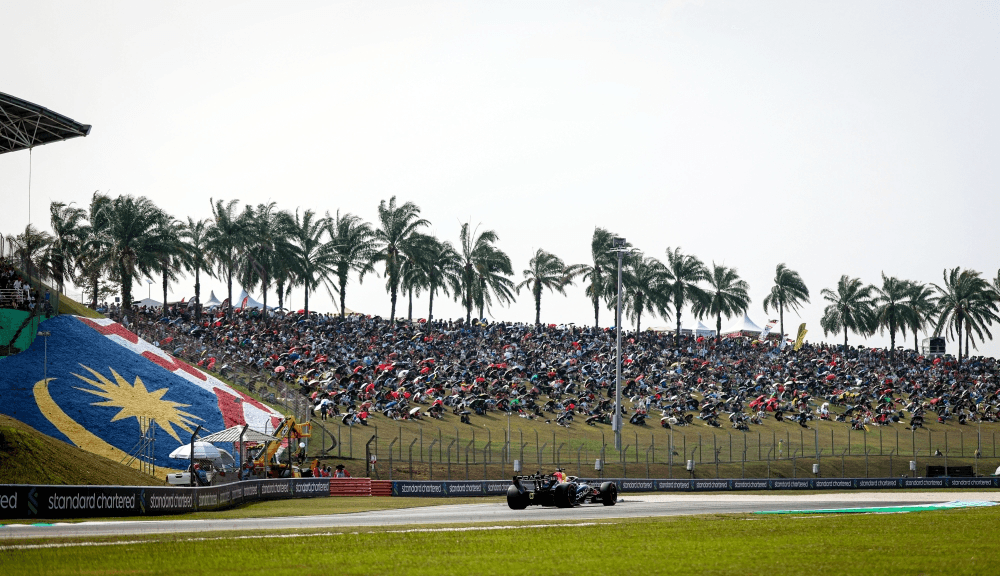
The return of Formula 1 to the Sepang International Circuit (SIC) after a nine-year absence highlights the international scope of this strategy. Malaysia hosted the Formula 1 Gulf Air Bahrain Grand Prix from 2–4 October after geopolitical conditions in West Asia prevented the race from taking place at its original venue.
The hosting arrangement was facilitated through high-level diplomatic channels involving His Majesty Sultan Ibrahim, King of Malaysia, and Bahrain’s King Hamad bin Isa Al Khalifa, alongside government-level coordination between Prime Minister Anwar Ibrahim and Bahrain’s Crown Prince and Prime Minister, Prince Salman bin Hamad Al Khalifa.
Key high-level engagements during the race weekend spanned both executive diplomacy and measurable economic outcomes. Prime Minister Anwar attended the qualifying session, visited the Mercedes-AMG Petronas pit, and participated in an official reception hosted by Prince Salman, allowing bilateral discussions to take place naturally in conjunction with the event rather than through traditional formal summits.
Public response reached record levels, with the Sepang International Circuit recording approximately 95,000 three-day ticket sales by late September and total attendance approaching nearly 100,000 spectators. Beyond the track, the Ministry of Tourism, Arts and Culture estimated an influx of 300,000 visitors—including 50,000 international tourists—while Hong Leong Bank Research projected a total economic yield of RM1.3 billion driven by foreign visitor spending and sports tourism.
Fostering National Unity Through World Cup Broadcasts
On the domestic front, the government’s decision to secure broadcasting rights for the 2026 Fifa World Cup serves as a key initiative for social inclusion.
The government allocated RM26.2 million in strategic partnership with private sector entities to ensure all 104 matches are widely accessible via RTM and Unifi TV.
Dr Mohd Mizan emphasized that universal access to major football broadcasts provides shared experiences that transcend socio-economic, regional, and demographic boundaries, turning public venues into unified national spaces.
He concluded that modern diplomacy extends far beyond formal conference rooms, stating that while diplomacy sometimes happens through bilateral negotiations, it can also happen through football or at 300 kilometres per hour around Sepang.