





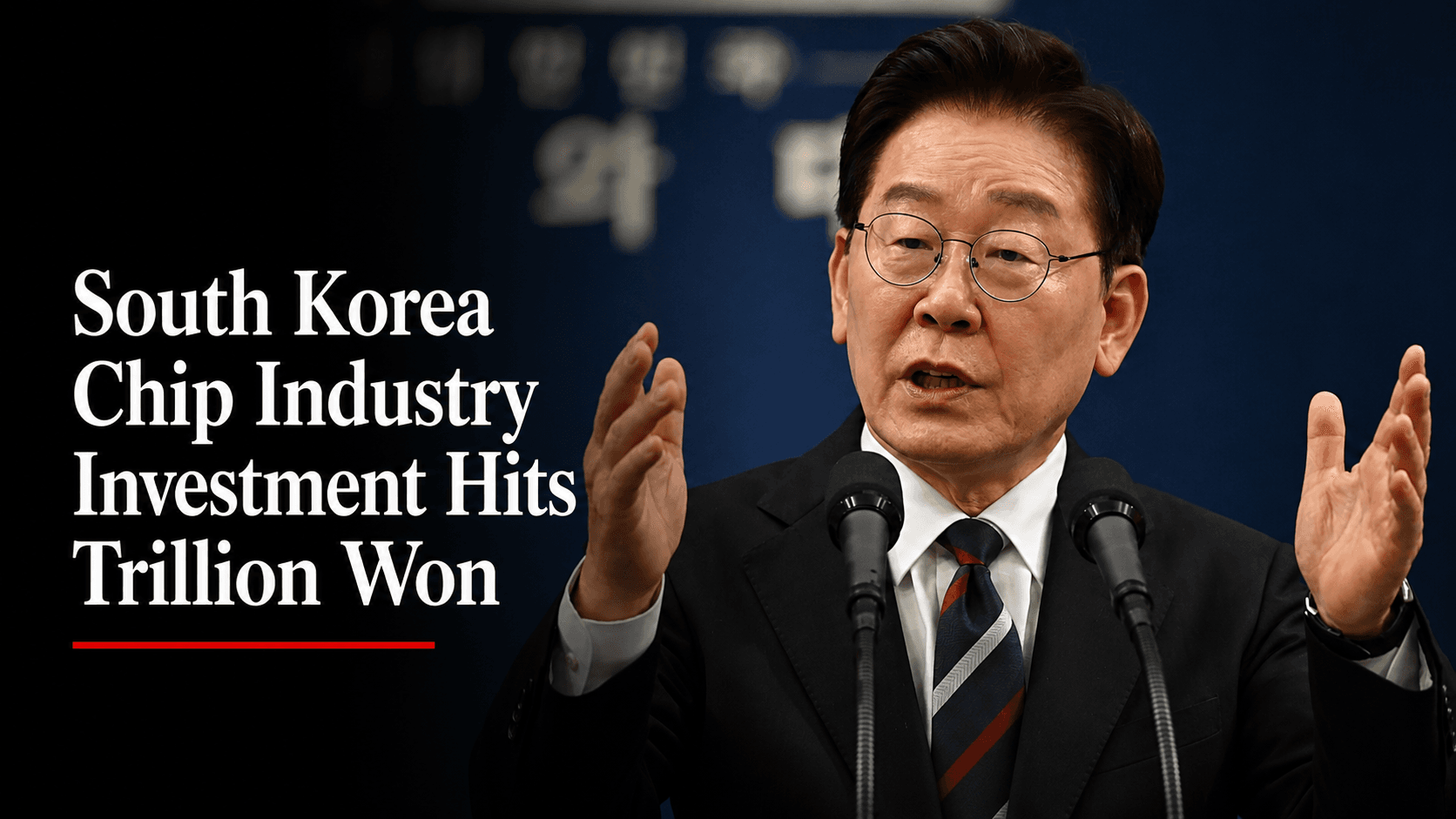
SEOUL – The South Korean government is preparing to launch a historic fiscal roadmap to secure absolute dominance over global artificial intelligence supply chains. Specifically, President Lee Jae-myung will unveil a massive South Korea chip industry investment drive intended to fuel the nation’s next macroeconomic growth phase. According to presidential briefing materials released on Monday, the total capital commitment from the state and top tech conglomerates could exceed a staggering 1,000 trillion won ($651.41 billion) over the coming years.
The landmark initiative is framed by the Blue House as a national “great leap” forward. The comprehensive blueprint will span advanced logic semiconductors, AI data center networks, and physical AI systems like commercial robotics. High-level ministers covering science, transport, and climate are scheduled to outline intensive regulatory support structures during the formal afternoon briefing.
Mega-Projects Broaden the South Korea Chip Industry Investment
The centerpiece of the aggressive expansion strategy involves establishing a brand-new semiconductor production cluster in the country’s underdeveloped southwestern region. For instance, this targeted South Korea chip industry investment layout will place mega-fabs directly across Gwangju and South Jeolla province. The strategic geographical pivot aims to narrow deep economic disparities between the rural provinces and the heavily saturated Seoul metropolitan area.
Furthermore, tech heavyweights Samsung Electronics and SK Hynix are projected to anchor the southwestern hub with massive manufacturing facilities. The two global titans plan to build four to five cutting-edge wafer fabs while expanding critical high-bandwidth memory (HBM) packaging lines. To support these facilities, the state will deliver robust infrastructure packages covering industrial land allocations, specialized workforce training, and housing developments. Therefore, this long-term layout ensures that the South Korea chip industry investment remains heavily insulated against domestic supply chain bottlenecks.
Infrastructure Concerns Challenge the Southwest Expansion
Despite the optimistic corporate projections, the ambitious provincial layout faces intense scrutiny from local market analysts and political rivals. For example, industry experts warn that building cutting-edge fabrication plants requires immediate access to vast volumes of electricity and industrial water. Critics question whether remote regions can scale up deep supplier ecosystems fast enough to satisfy pressing Silicon Valley production timelines.
Defending the South Korea Chip Industry Investment Focus
Meanwhile, President Lee has actively defended the multi-billion-dollar semiconductor ecosystem against claims of political favoritism ahead of upcoming local polls. He framed the regional development plan as a vital national survival strategy to secure clean energy for global compliance standards. The southwest coast offers abundant solar and wind reserves, making it ideal for tech firms aiming to hit strict corporate RE100 renewable energy targets. Ultimately, this aggressive acceleration of the South Korea chip industry investment establishes a highly resilient foundation to dominate the next generation of global AI computing power.