






The Shrine with No Idols
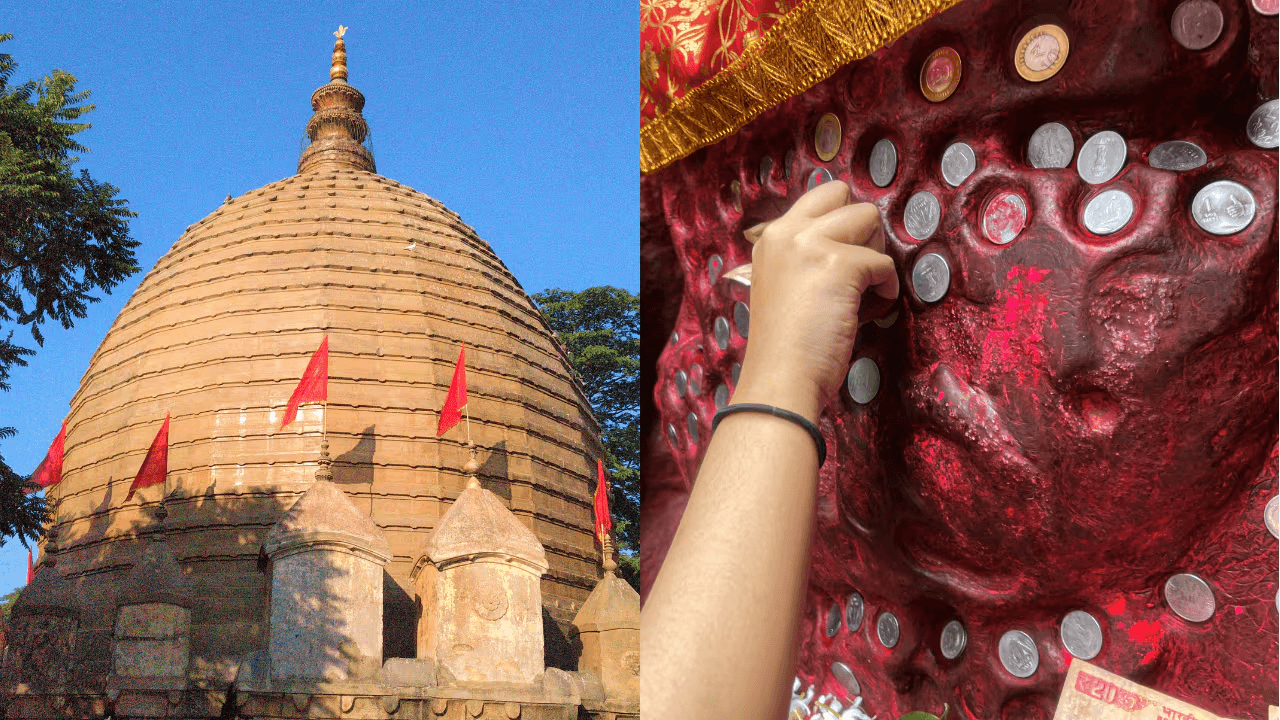
Tucked away on the emerald slopes of Nilachal Hill in Guwahati, Assam, stands a monument that turns conventional religious architecture on its head. Most sacred structures around the world are designed to house grand, towering representations of the divine. Yet, if you walk into the inner sanctum of the historic Kamakhya Temple, you will not find a single statue, painting, or carved idol of the presiding goddess.
Instead, the focal point of the entire complex is a simple, natural rock formation shaped like a yoni, the female genitalia.
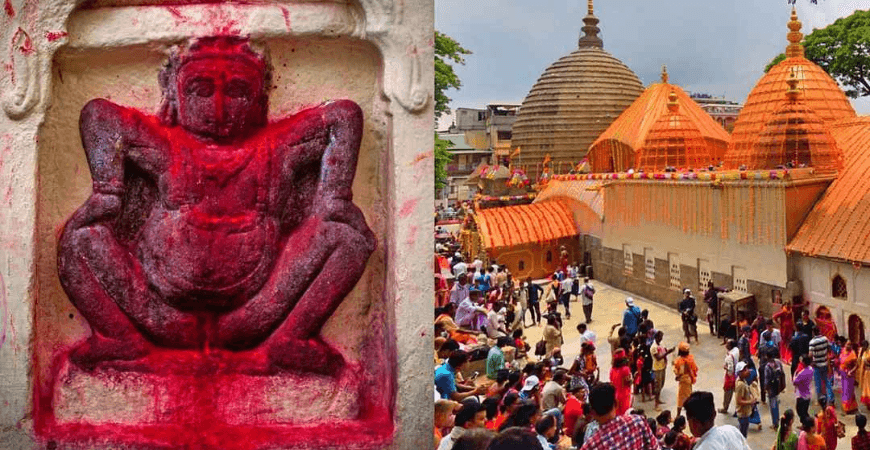
Kept continuously moist by a natural underground spring flowing deep within the cave system, this stone serves as the literal and metaphorical heart of the shrine. For over two millennia, millions of pilgrims have travelled to this remote corner of Northeast India to bow before it, leaving offerings of fresh flowers and leaves. In doing so, they participate in an ancient tradition that flips modern societal scripts, transforming a topic often shrouded in silence into a profound celebration of cosmic creation.
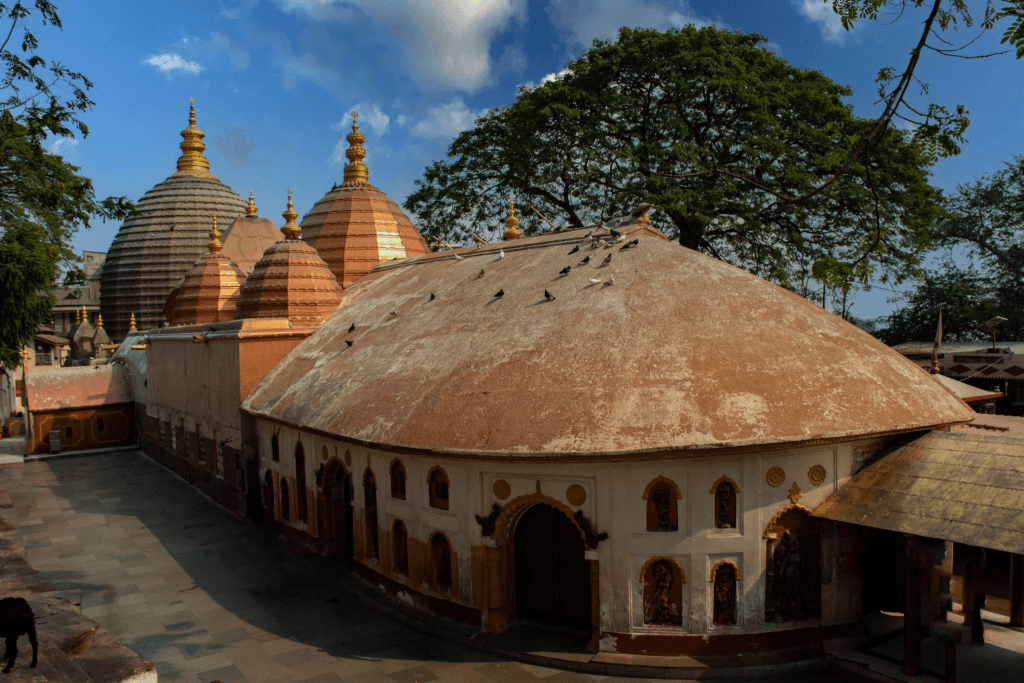
The Anatomy of Divine Power
To understand why this specific hillside carries such immense spiritual weight, one has to look back at the foundational lore of the 51 Shakti Peethas. Traditional texts recount the intense grief of Lord Shiva following the self-immolation of his consort, Goddess Sati. As he carried her body across the cosmos in a state of deep sorrow, Lord Vishnu used his celestial disc to dismember the form to restore absolute balance to the universe.
The places where those fragments touched the earth instantly transformed into sacred geographies of spiritual power, or shakti.
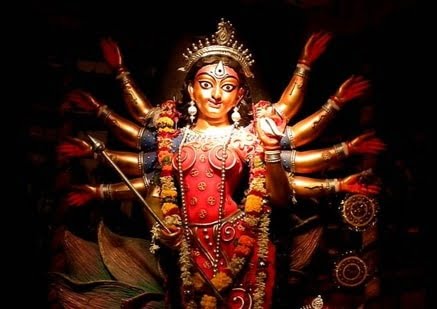
According to regional belief, Sati’s womb and reproductive organs descended directly upon Nilachal Hill. This specific event established Kamakhya as the ultimate seat of feminine creative energy. Over the centuries, this deep theological grounding gave birth to a complex iconographical identity. While the inner cave remains entirely formless, traditional art outside portrays the goddess as a radiant figure with six heads and twelve arms, safely seated upon a lotus resting above Lord Shiva. This imagery serves as a visual metaphor for the perfect union between the masculine and feminine forces that balance the universe.
When the Earth Bleeds
The core philosophy of the temple manifests most vividly every June during the arrival of the heavy monsoon rains. This season marks the annual Ambubachi Mela, a massive festival often referred to as the Mahakumbh of the East. During this specific four-day window, the main doors of the temple are completely sealed, and regular worship is suspended as the goddess is believed to undergo her natural menstrual cycle.
Outside the closed doors, the atmosphere transforms completely as thousands of sadhus, mystics, and spiritual seekers gather along the hillside steps.
Simultaneously, a striking natural phenomenon occurs in the valley below. The waters of the adjacent Brahmaputra River turn a deep, distinct reddish hue. While modern scientists attribute the dramatic seasonal colour shift to natural iron oxide deposits and silt washing down from the hillsides during early monsoon downpours, the timing remains a deeply symbolic event for the faithful. It serves as a visual reminder of a planet rejuvenating itself, linking human biology directly to the fertile rhythms of the earth.
Beyond the Veil of Silence
When the purification rituals conclude and the heavy sanctuary doors finally swing open to the public, the priests distribute a highly sought-after blessing known as the rakta bastra. This sacred token is a small piece of red cloth believed to be sanctified by the natural fluids of the stone during the closure period. Devotees from every walk of life receive it with deep reverence, holding it as a powerful talisman of protection, abundance, and luck.
Ultimately, the true beauty of Kamakhya lies in its capacity to deconstruct modern embarrassments. In a world where basic reproductive health and the natural cycles of womanhood are frequently hidden away or treated with systemic discomfort, this ancient space offers an entirely different perspective. It stands as a vibrant, unapologetic reminder that the very processes responsible for the continuation of human life are not things to be hidden in the shadows. Instead, they are deeply sacred, worthy of being honoured out in the open.