






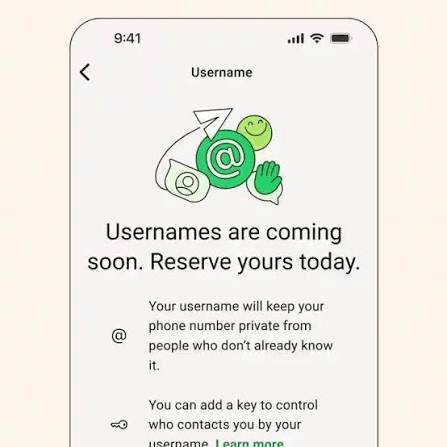
Meta has officially initiated the global rollout for WhatsApp username reservations, introducing a major architectural update designed to decouple user identities from personal mobile numbers.
The phased pre-launch allows the platform’s vast user base to claim and lock their preferred handles ahead of full functional integration scheduled for later this year. However, the ambitious privacy campaign has run straight into immediate regulatory pushback over severe identity verification and cyberfraud anxieties.
Redesigning Contact Exchange Mechanics
For more than a decade, WhatsApp has relied exclusively on mobile phone numbers to establish accounts and connect users. While functionally seamless, this infrastructure has routinely forced individuals to expose private contact information to strangers when participating in localized marketplace transactions, joining hyper-local community groups, or networking at corporate events.
The introduction of handles changes this dynamic by allowing users to share an alphanumeric alias while keeping their underlying hardware digits completely concealed from view. According to engineering documentation issued by the communication platform, the ecosystem utilizes a highly restrictive, privacy-centric design,
- Zero Search Directories – Unlike standard public networks, WhatsApp will completely omit any searchable global directory or automated contact suggestions. To initiate a chat, an external party must already know the exact casing and layout of a handle.
- The Username Key System – For reinforced access management, accounts can implement an optional username key. This acts as a separate passcode that first-time senders must enter before a message can enter an inbox.
- Meta Identity Synchronization – To streamline branding consistency, independent content creators, verified organizations, and small businesses are permitted to directly sync and reserve handles identical to their active Instagram or Facebook profiles.
The reservation protocol dictates that handles must range between 3 and 35 characters, utilizing lowercase letters, numbers, underscores, and periods. To proactively combat malicious squatting, Meta has preemptively locked high-profile handles belonging to global celebrities, political figures, and international government organizations.
Urgent Regulatory Interventions
Despite Meta’s built-in defenses, the security community and government ministries have raised major concerns. Tech authorities, led by national IT regulatory ministries, have issued an immediate directive ordering Meta to halt future rollout procedures until a thorough security evaluation concludes. Tech giants have been given a strict three-day deadline to deliver an exhaustive explanation detailing how the handle framework will resist sophisticated phishing operations, identity spoofing, and lookalike brand scams.
Tech leaders and platform founders have also warned that without strict, continuous verification mechanics, bad actors could easily deploy subtle typographic variations of trusted consumer banking and public utility profiles to execute digital fraud. Regulators remain highly concerned that masking original mobile numbers entirely could hinder immediate law enforcement efforts to trace anonymous threat actors during active cybercrime investigations.
In response to these official concerns, a WhatsApp representative clarified that while early reservations remain active for eligible accounts, the live messaging function will roll out gradually as developers work closely with international ministries to optimize contextual warning banners and anti-impersonation mechanisms.