





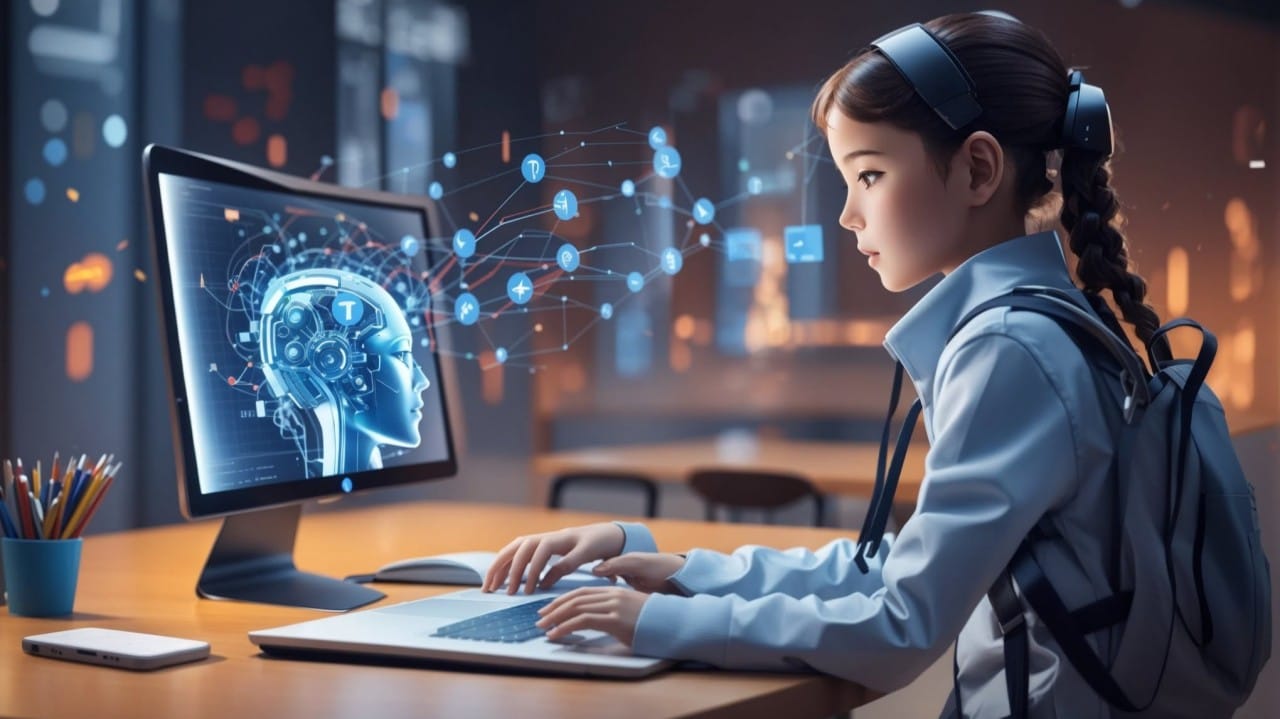
KUALA LUMPUR, 10 June — Malaysia risks raising a generation of children who are highly proficient with artificial intelligence (AI) but show a decline in basic problem-solving and analytical skills, an education expert warned today, noting that the threat stems from children over-relying on digital tools to complete daily tasks, research, and school learning. Associate Professor Dr Kalaivani Chellappan, a senior lecturer at the Department of Electrical, Electronic and Systems Engineering, Universiti Kebangsaan Malaysia (UKM), stated that this dependency can undermine the mastery of basic skills essential for developing problem-solving capabilities and analytical skills.
To break down the core issues and solutions highlighted by the UKM study, the data has been organised into a clear summary,
| Research Factor | Key Findings and Practical Recommendations |
| The Study | Conducted from March 2024 to February 2026 across 12 suburban schools in Sepang |
| The Problem | Over 80% of students aged 9 to 12 struggled to solve questions requiring basic calculations |
| The Cause | Over-reliance on smartphone calculators and AI apps like ChatGPT to get instant answers |
| The Consequence | Lower mathematics and analytical performance when students enter secondary school |
| The Solution | Rebuild a “culture of thinking” using real-world numbers in daily tasks at home and school |
The Danger of Instant Digital Answers
The expert’s warnings are backed by a rigorous two-year study involving primary school students in the Sepang district. The data revealed that an overwhelming majority of children bypassed the learning process entirely by using calculators and AI applications to solve math problems.
“For them, there is no need to learn calculation methods, as tools are already available to provide answers,” Dr Kalaivani said. “This becomes a concern when technology is used as a substitute for learning rather than a complement.”

The research tracked these students over time and found a clear downward trend in academic performance. Pupils who relied heavily on digital aids during primary school showed significantly weaker thinking abilities when they entered secondary school. Dr Kalaivani clarified that the issue is not that the children are not smart, but rather that modern lifestyles limit their opportunities to work with numbers in daily life.
Rebuilding a Culture of Thinking
The study stresses that technology cannot replace the basic learning process. Instead, children must build strong numeracy and reasoning skills first so they can use AI safely and effectively later as a supporting tool. To fix this growing issue, Dr Kalaivani stated that the responsibility cannot fall solely on teachers. Parents and local communities must actively step in to help children practice problem-solving at home.
Parents can easily build these vital skills by involving their children in everyday household tasks. Simple activities like planning family budgets, going grocery shopping, measuring cooking ingredients, estimating travel times, and reading analogue clocks help children interact with numbers naturally. Additionally, schools should move away from strict, exam-oriented teaching methods and focus more on how math applies to real-world situations.
The ultimate goal is not to ban smartphones or reject modern technology, which would be unrealistic and counterproductive. Instead, Malaysia must shift how it views basic education. Math must not be treated merely as a boring classroom subject, but rather as the foundational language of human thinking. Every receipt, sports score, timetable, and bill should be treated as a valuable mathematics lesson.