






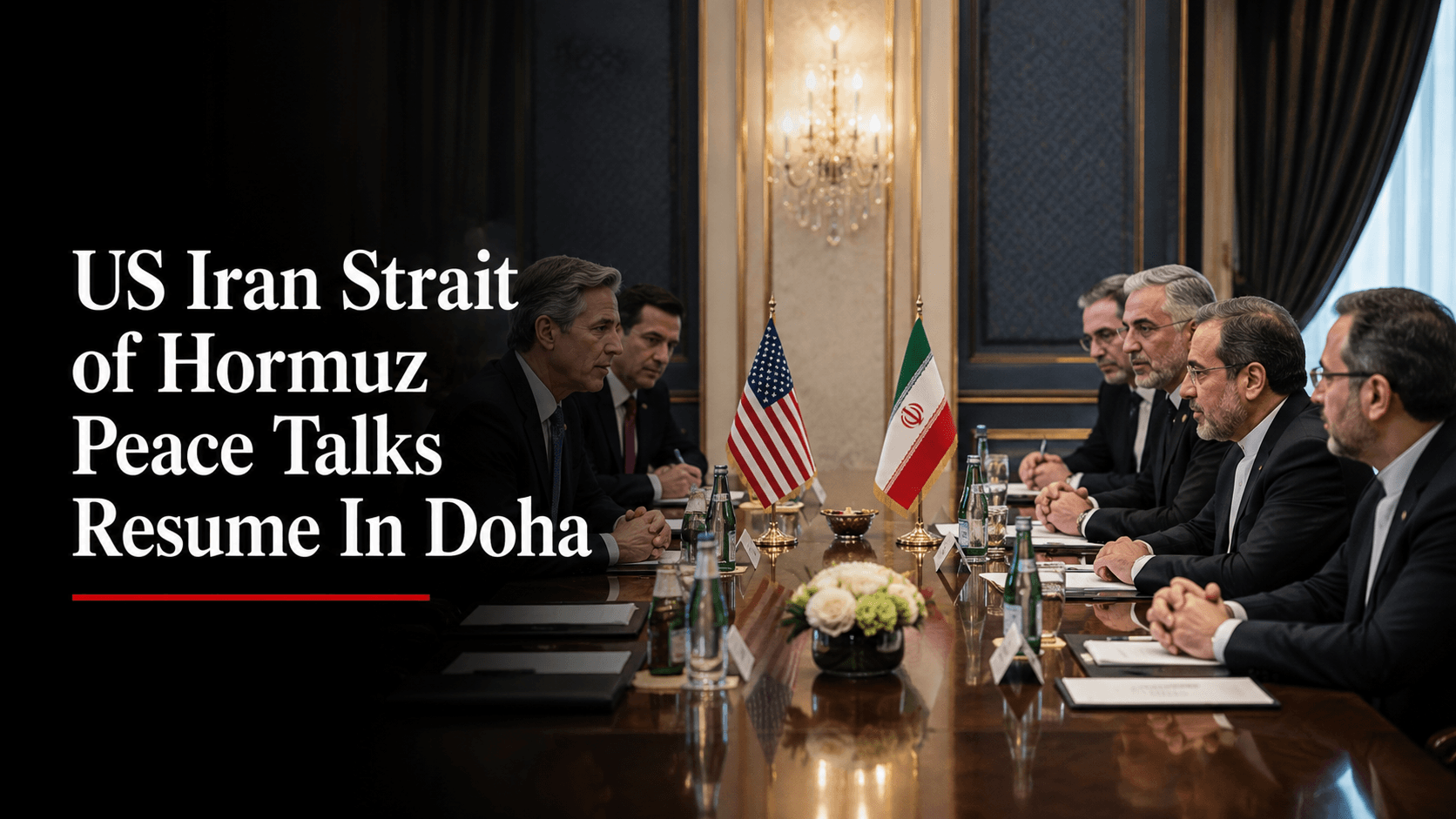
DUBAI – Washington and Tehran have reached a crucial diplomatic breakthrough to halt a dangerous wave of military escalations in the Gulf region. Specifically, top diplomats have agreed to immediately cease hostilities and officially renew the US-Iran Strait of Hormuz peace talks. A senior United States official confirmed the sudden bilateral stand-down on Sunday evening. The diplomatic pivot aims to salvage a fragile 14-point interim peace memorandum that had threatened to unravel completely over the weekend.
Sudden Ceasefire Halts Intense Tit-for-Tat Gulf Escalations
The decision to return to the negotiating table follows an intense, multi-day flare-up of direct military exchanges. For instance, the latest crisis ignited on Thursday when an Iranian projectile struck a commercial cargo vessel transiting the strategic shipping lanes. In direct response, United States Central Command (CENTCOM) forces launched heavy retaliatory airstrikes against Iranian surveillance hubs and drone storage facilities. This rapid chain of events highlights why anchoring the US-Iran Strait of Hormuz peace talks is critical to preventing a wider international conflict.
Furthermore, the military friction spiked dramatically on Sunday morning before the breakthrough was finalized. Iran’s Islamic Revolutionary Guard Corps (IRGC) deployed waves of ballistic missiles and explosive drones at U.S. military bases in Kuwait and Bahrain. U.S. President Donald Trump issued a stern warning on social media, threatening total military action if the interim accord was breached further. Therefore, the sudden agreement to disengage interrupted what was rapidly becoming the most severe confrontation of the four-month-old war.
Qatar Summit Aims to Stabilize Vital Energy Shipping Lines
The primary goal of the upcoming diplomatic round is to restore absolute safety to the world’s most critical energy transit corridor. For example, technical delegations from both nations are scheduled to convene on Tuesday in Doha, Qatar, to iron out persistent shipping disputes. Under the original June 17 framework, commercial vessels are supposed to move freely through the waterway without interference from regional navies. Resolving these naval boundaries during the US-Iran Strait of Hormuz peace talks remains the key to stabilizing global crude prices.
Meanwhile, international maritime security agencies have temporarily instructed cargo fleets to maintain maximum vigilance while the ceasefire settles. Representatives from neighboring Gulf states have expressed profound relief at the pause in hostilities, urging both global superpowers to stick to their diplomatic commitments. The White House confirmed that technical talks will continue to cover all core areas of the Memorandum of Understanding, including the verification of unfrozen state assets. Ultimately, the resumption of the US-Iran Strait of Hormuz peace talks proves that both sides prefer managed diplomacy over an uncontrollable regional war.