






What began as a controversy surrounding the NEET examination has evolved into something much larger. For many Indians, the issue is no longer solely about an entrance test or a paper leak it has become a conversation about governance, public trust, and the future of the country.
The NEET controversy has exposed concerns that many citizens believe have existed for years. While investigations into the examination continue, the nationwide reaction reflects a deeper frustration with how public institutions respond when crises emerge.
Many students and parents argue that the warning signs should have been addressed long before the situation escalated.
Their question is straightforward – Could stronger oversight and earlier intervention have prevented the chaos?
As demonstrations spread across the country, attention shifted beyond examination halls to the streets. Images of students, parents, and ordinary citizens facing clashes with security forces have intensified public debate. Protesters claim that many people exercising their democratic right to assemble were met with force, while authorities have maintained that security measures were necessary to maintain public order.
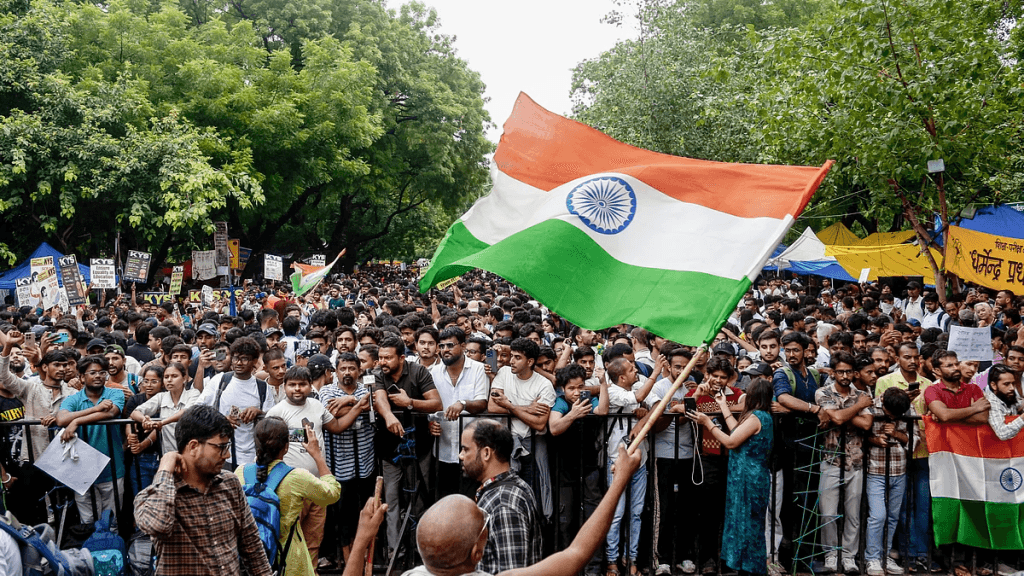
"A nation’s future on the line." Massive crowd of students takes to the streets of New Delhi, unfurling the tricolor to demand transparency and justice in national competitive exams.
The scenes have prompted many citizens to ask whether dialogue could have taken place before tensions reached a breaking point.
For many observers, the concern is not about assigning blame to a single institution or individual. Instead, it is about whether those entrusted with responsibility acted quickly enough to prevent the crisis from growing.
Critics argue that public confidence is damaged when action appears to come only after widespread outrage. They believe institutions function best when problems are identified and resolved early not after thousands of lives have already been affected.
The conversation has also expanded beyond education.
Many see the NEET controversy as a reflection of broader challenges facing the country, including transparency, accountability, and the efficiency of public systems. According to those voices, the examination did not create these issues it merely brought them into the national spotlight.
Today, the debate centers on education.
Tomorrow, many fear it could involve healthcare, public services, infrastructure, or other sectors that directly affect everyday life.
Citizens across social media and public forums continue to raise similar concerns:
Can public institutions respond before crisis become national emergencies?
How can transparency and accountability be strengthened?
What reforms are needed to rebuild public trust?
How can equal opportunities be protected for every student, regardless of background?
Another growing concern is the future of India’s youth.
Many young Indians increasingly speak about pursuing education or careers abroad, believing they may find greater opportunities elsewhere. While migration for education and employment has long existed, many believe the country should strive to become a place where its brightest minds choose to stay not because they have no alternative, but because they have confidence in the systems around them.
The discussion has also turned toward the responsibilities of governance.
Citizens who contribute through taxes expect public funds to translate into tangible improvements: stronger schools, better hospitals, cleaner public spaces, reliable infrastructure, efficient public services, and transparent institutions. Many argue that development should ultimately be reflected in the quality of everyday life experienced by ordinary people.
Political speeches and economic statistics remain important indicators of progress. However, many citizens believe that development is equally measured by clean public facilities, safe streets, honest administration, accessible healthcare, quality education, and the trust people place in public institutions.
The NEET controversy has therefore become more than a dispute over one examination.
For many Indians, it represents an opportunity to ask difficult but necessary questions about the systems that shape the nation’s future. The calls being heard across the country are not simply demands for solutions to one crisis they are appeals for institutions that are fair, transparent, accountable, and capable of earning public confidence.
Ultimately, many believe this is not a battle between citizens and the state.
It is a shared challenge: India versus the problems holding India back. The outcome will not be determined by one examination alone, but by how the country chooses to respond, reform, and rebuild trust for generations to come.


