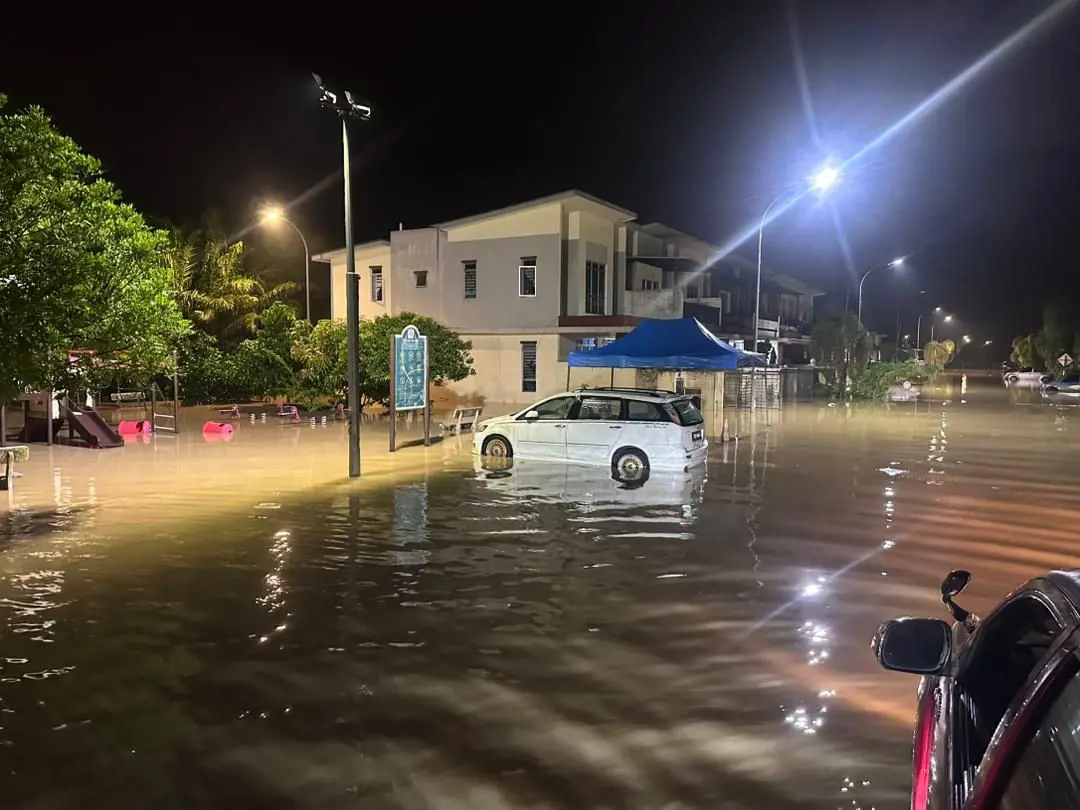







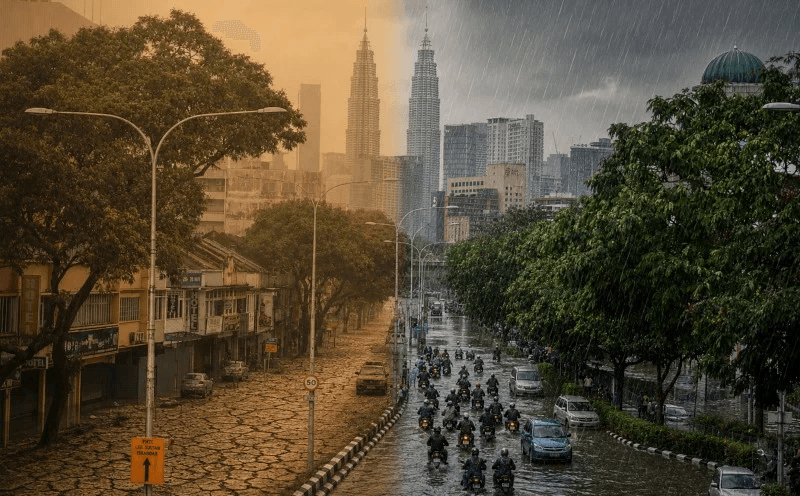
KUALA LUMPUR — The Malaysian Meteorological Department (MetMalaysia) has issued an urgent advisory urging the public and government agencies to prepare for severe weather anomalies, warning that a developing “Super El Niño” phenomenon could hit the nation by the end of 2026.
Dr. Ahmad Fairudz Jamaluddin, Director of MetMalaysia’s National Climate Centre, revealed that global predictive models indicate a high probability of a rapid, drastic rise in sea surface temperatures across the Pacific Ocean. Speaking on Bernama Radio’s Jendela Fikir program, Dr. Ahmad Fairudz noted that while Malaysia is currently experiencing a weak El Niño phase, the system is projected to intensify significantly over the coming months.
“If a Super El Niño materializes late this year or early next year, Malaysia is likely to face extreme climate conditions reminiscent of the historic 1997–1998 and 2015–2016 episodes,” he warned, emphasizing that past events caused massive disruption to public health and domestic economic output.
Echoes of Past Climatic Crises
MetMalaysia highlighted that previous severe El Niño cycles forced severe emergency interventions,
- The 1997–1998 Crisis– Malaysia recorded an all-time high temperature of 40.1°C, and multiple regions—particularly Sarawak—were forced into states of emergency due to toxic, suffocating transboundary haze.
- The 2015–2016 Crisis– Scorching daily temperatures persistently exceeded 37°C, forcing the temporary closure of more than 250 schools across northern Peninsular Malaysia to protect students from extreme heat exhaustion.
Monsoon Dynamics and Severe Rainfall Deficits
The onset of the current Southwest Monsoon has already begun altering precipitation patterns, resulting in unseasonably early rainfall drops across several key territories.
MetMalaysia projections indicate that southern Peninsular Malaysia, northern Sarawak, and eastern Sabah are expected to see rainfall plunge by up to 40% below normal levels. Meanwhile, southern Sarawak faces the highest risk, with rainfall volumes anticipated to collapse by up to 60%.
| Region | Anticipated Rainfall Reduction |
| Southern Peninsular Malaysia | Up to 40% decrease |
| Northern Sarawak | Up to 40% decrease |
| Eastern Sabah | Up to 40% decrease |
| Southern Sarawak | Up to 60% decrease |
To mitigate a looming water crisis, MetMalaysia, alongside allied state agencies, has initiated proactive cloud seeding operations over major agricultural and domestic dams experiencing dropping reservoirs. However, Dr. Ahmad Fairudz cautioned that these operations face steep operational challenges if local atmospheric columns remain too dry or if skies become choked by thick haze.
Government Mobilization and Public Action Plan
In response to the multi-month outlook, MetMalaysia has executed roughly 70 briefing and engagement sessions with various federal ministries, state governments, and industrial stakeholders to lock down early mitigation and adaptation frameworks.
The department is utilizing advanced tools like the Malaysian Fire Danger Rating System (FDRS) to continuously scan and identify peatlands and forest ecosystems carrying high ignition risks during the dry spell. Periodic agro-meteorological tracking and heatwave alerts are also being distributed to shield the agricultural supply chain.
MetMalaysia’s Public Safety Guidelines,
- Strictly avoid open burning to suppress wildfire and localized haze risks.
- Minimize strenuous outdoor activities during peak daily heat windows.
- Practice aggressive water and electricity conservation measures to ease grid and utility strain.
- Closely monitor official weather updates exclusively via MetMalaysia digital channels.