





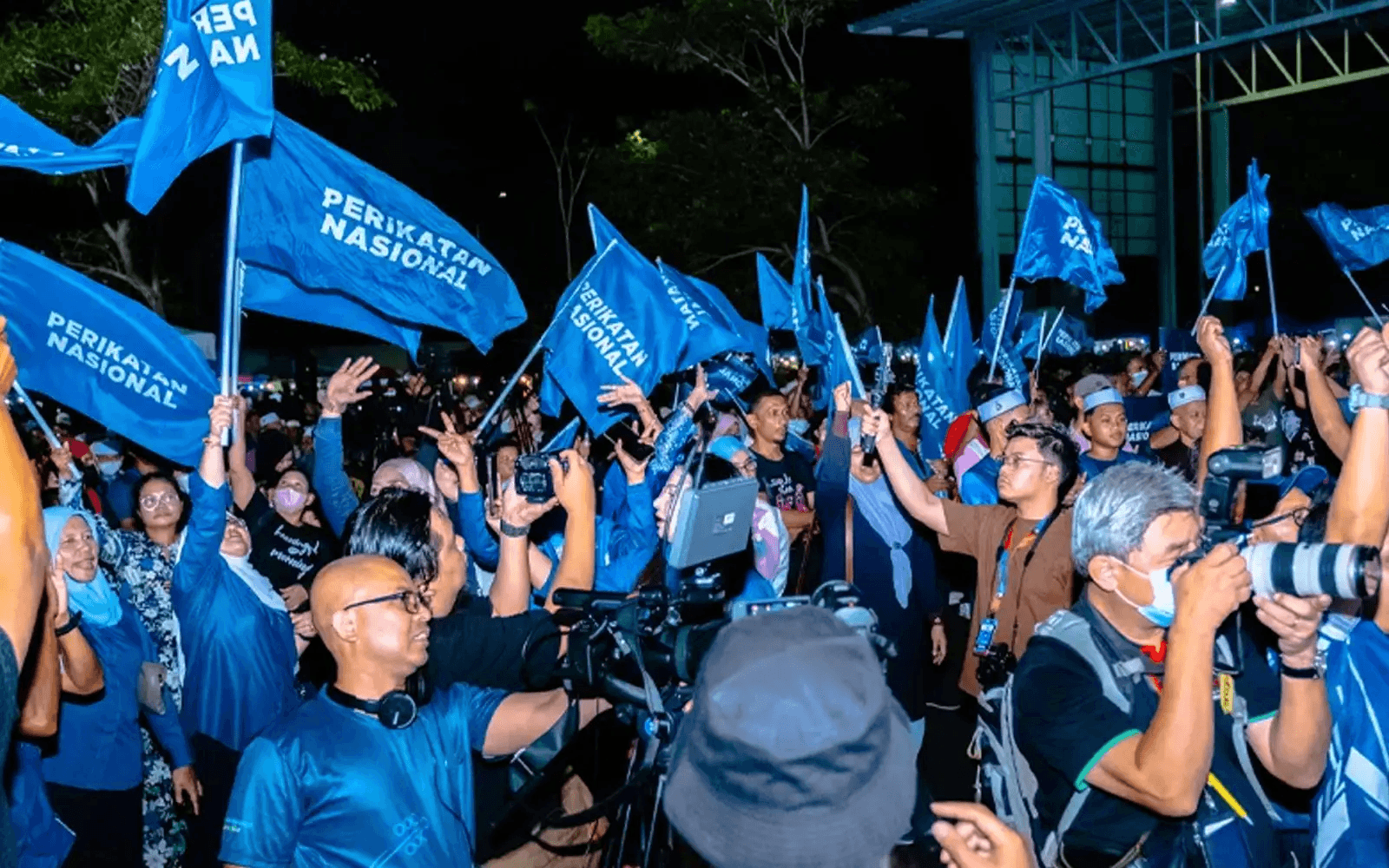
PETALING JAYA — The formal expansion of Perikatan Nasional (PN) to include Parti Wawasan Negara (Wawasan) and Parti Pejuang Tanah Air (Pejuang) could ignite an internal “civil war” over Malay-majority constituencies ahead of Malaysia’s next general election, political analysts warn.
The admission of the two new parties expands the opposition coalition to six component members. However, the development threatens to fracture PN’s internal seat-negotiation balance, primarily compressing the electoral footprint and traditional territory of the Muhyiddin Yassin-led Parti Pribumi Bersatu Malaysia (Bersatu).
Cannibalizing Bersatu’s Electoral Base
Political experts note that because PN’s core parties target the exact same demographic, overlap in rural and semi-urban constituencies will be incredibly difficult to resolve.
Ahmad Zaharuddin Sani Ahmad Sabri of Global Asia Consulting stated that Bersatu now faces the uncomfortable reality of sharing its voter base with parties heavily populated by its own former members. Notably, Wawasan is led by Hamzah Zainudin, Bersatu’s former deputy president who was sacked from the party in February and took a substantial faction of MPs and state assemblymen with him.
“When the voter pool is the same, seat distribution in the next election could become a ‘civil war’ battleground,” Zaharuddin remarked. “PAS will certainly not give up its stronghold seats, while Bersatu, which is trying to stay relevant, is also unlikely to concede traditional seats to Wawasan or Pejuang.”
Shifting Alliances and the “Nationalist Anchor”
The restructuring comes amid a wider internal crisis for the opposition bloc, which was heavily shaken when PAS recently made the decision to end its formal cooperation with Bersatu.
Dr. Syaza Shukri of the International Islamic University Malaysia (IIUM) suggested that Wawasan’s entry could see the new party completely absorb Bersatu’s role as the coalition’s primary Malay-nationalist anchor. The concentration of experienced former Bersatu leaders within Wawasan’s central leadership framework could continuously dilute Bersatu’s perceived structural authority, despite its history as a founding pillar of PN.
| Coalition Party | Expected Electoral Outlook & Strategy |
| PAS | Expected to firmly hold all core stronghold and incumbent seats. |
| Bersatu | Fighting to retain its traditional seats against internal offshoots. |
| Wawasan | Poised to challenge Bersatu’s dominance as the primary nationalist anchor. |
| Pejuang | Likely forced to accept a junior role due to lack of a defined geographic base. |
Pejuang’s Ambiguous Value Proposition
While Wawasan enters the coalition carrying active parliamentary and state representation, analysts remain skeptical about what Pejuang brings to PN’s broader ground game.
Azmi Hassan of Akademi Nusantara pointed out that Pejuang has yet to establish a track record of winning seats or demonstrating a distinct, identifiable demographic following.
“It is basically unknown which group Pejuang’s support base is,” Azmi said. “Whether it is urban, semi-urban, or rural voters, we cannot clearly identify it, because Pejuang has no track record of winning seats.” Consequently, as PN shifts into formal seat allocation debates, incumbents from PAS and Wawasan are expected to command the negotiation tables, leaving Bersatu defensively cornered and Pejuang operating from a junior position.