







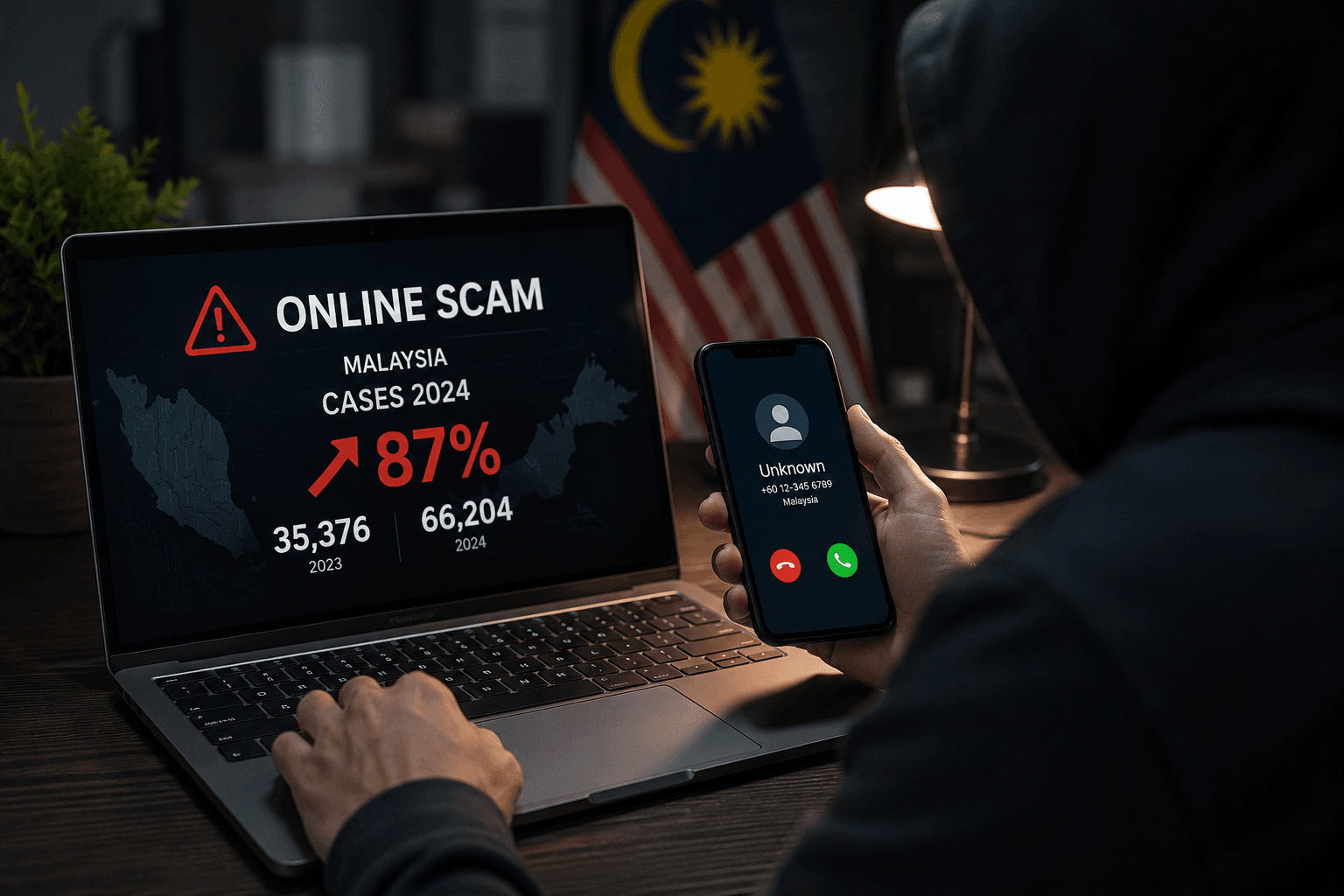
KUALA LUMPUR – Commercial cybercrimes have reached an alarming milestone in Malaysia. Specifically, total online scam cases surged by 87% to a staggering 66,204 incidents in 2025 compared to the previous year. Inspector-General of Police Tan Sri Razarudin Husain revealed these shocking statistics on Monday morning during a federal security briefing. He noted that the total financial losses from these digital traps hit an unprecedented RM2.3 billion. This sharp rise has prompted federal authorities to completely overhaul their cybersecurity strategy.
E-Commerce Fraud Drives Massive Spike
Specialized police task forces identified e-commerce traps as the leading cause behind the numbers. For instance, data from the Commercial Crime Investigation Department (CCID) shows that fake online shopping sites and social media marketplaces duped thousands of citizens. Victims often paid for electronics, holiday packages, or luxury goods that never arrived. Furthermore, telecommunications fraud, such as impersonation phone scams and fake bank messages, accounted for another huge chunk of the reported online scam cases.
Consequently, syndicate networks are continuously updating their tactics to target unsuspecting smartphone users. For example, bad actors now use sophisticated artificial intelligence to mimic the voices of family members or corporate chiefs. Also, some rings set up complex malware download links under the guise of festive promotions or utility bill rebates. Because these digital attacks can wipe out an entire bank account within minutes, the police are calling for immediate public caution.
Federal Teams Move as Online Scam Cases Surge
To suppress the rising wave of cybercrimes, the government has significantly increased resources for enforcement teams. In fact, federal police have actively coordinated with the National Anti-Financial Crime Centre (NFCC) to freeze suspicious funds much faster. During recent tactical operations, tech experts successfully blocked transactions linked to mule accounts across multiple local banks. Therefore, the state will continue to push for tighter financial laws to make it much harder for syndicates to move stolen cash.
Meanwhile, federal prosecutors are handing down severe penalties to individuals who rent out their bank cards to syndicates. For example, courts have fined and jailed hundreds of mule account holders to send a clear message to the community. The police work under the Penal Code and the Computer Crimes Act to penalize these digital accomplices strictly. Additionally, local officers are cooperating with regional tracking agencies across Southeast Asia to smash international call center bases.
Safeguarding Personal Finances from Fraud
The rapid increase in online threats requires immediate and smart action from all mobile users. For instance, the IGP urged citizens to use the National Scam Response Centre (NSRC) 997 hotline right away if they accidentally share their bank info with a stranger. Calling within the first hour gives banks the best shot at stopping the money trail. This rapid community action serves as a vital shield to secure financial balances.
Finally, official public verification portals like the CCID “Semak Mule” platform remain totally open and free for everyone. People can run quick background checks on suspicious phone numbers or bank accounts before making any digital payments. The Royal Malaysia Police hope this widespread sharing of data will help trap scammers before they can strike. Ultimately, stamping out online scam cases remains a critical national priority.