




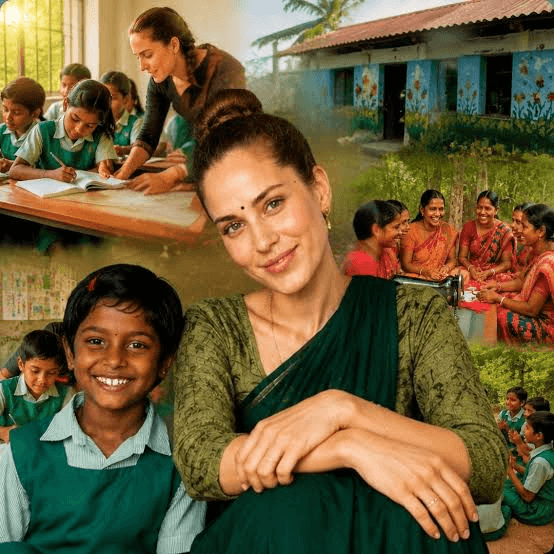
KOLKATA — Fifteen years ago, Sandra Lavie Gojkovic walked away from a lucrative corporate career, financial security, and a comfortable life in Switzerland. Packing just two pairs of clothes, she boarded a one-way flight to India—not for a career pivot, but in pursuit of a life centered on service.
Today, that decision has materialized into a free primary school and a wide-reaching community development network across the remote river islands of West Bengal, impacting nearly 20,000 residents across 30 villages.
From Corporate Comfort to Grassroots Reality
Gojkovic grew up in Zurich and later built a successful corporate career in Dubai. Yet, despite financial success, she found herself questioning the stark disparities in global privilege. Guided by personal conviction and inspired by the philosophy of Sanatana Dharma, she resigned from her job to explore grassroots humanitarian work in India.
Her initial experience was far from seamless. Confronted by immediate culture shock and early scams, Gojkovic spent months volunteering across various regional projects. However, observing widespread financial mismanagement and short-term intervention models among established entities, she chose to build an independent initiative from the ground up.
Traveling by train and boat to some of West Bengal’s most isolated island communities, she prioritized listening over imposing pre-packaged solutions.
Overcoming Community Resistance
Building trust among island villagers proved to be the project’s steepest hurdle. With many families relying on their children for daily economic survival, convincing parents to prioritize education required months of persistent outreach.
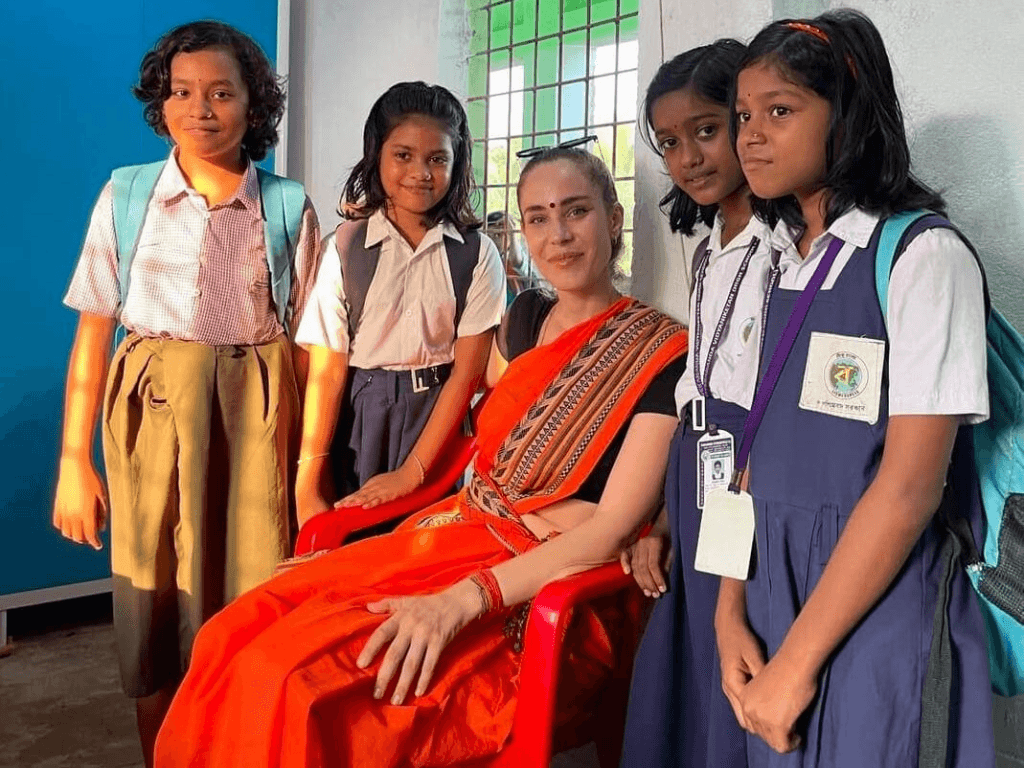
Gojkovic and her local team conducted daily door-to-door visits to demonstrate the long-term value of schooling. To maintain attendance, teachers instituted daily morning check-ins at students’ homes—a practice that gradually transformed skeptical parents into active supporters.
Targeting Child Marriage and Human Trafficking
Beyond basic literacy and numeracy, the school has evolved into a vital social protection hub in a region vulnerable to seasonal displacement and exploitation.
- Youth Leadership – The initiative has trained over 100 local youth leaders to educate their peers on human rights and social safety nets.
- Direct Interventions – Students and staff regularly collaborate with local authorities to intercept human trafficking networks and prevent child marriages across 30 neighboring villages.
“Seeing former students helping protect the next generation—that’s when you know real change is happening,” Gojkovic reflected. “Switzerland shaped how I work, but India shaped who I am.”